EN
EN

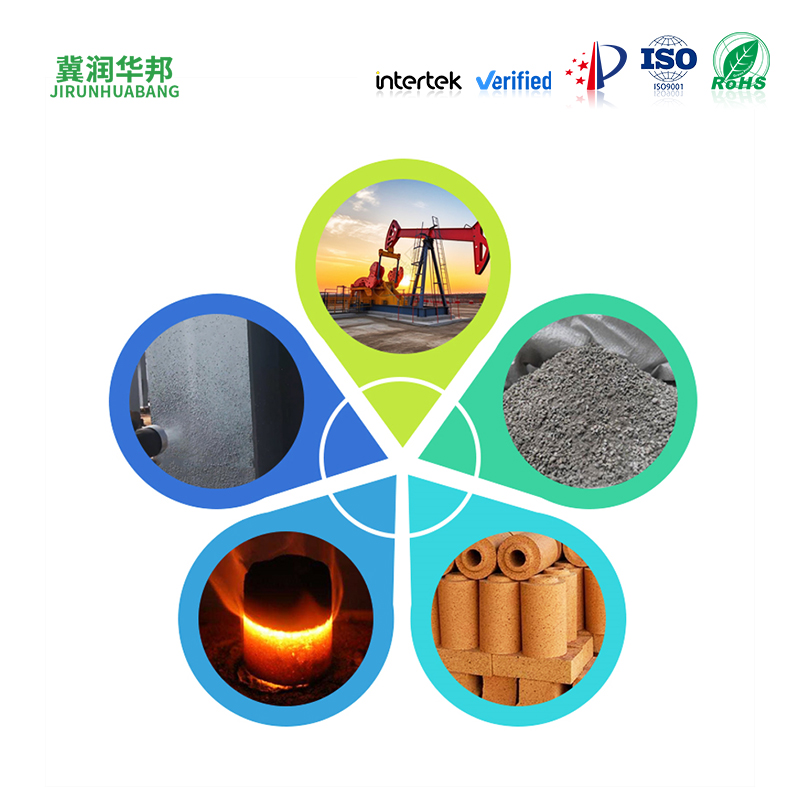
Refractory castables are a critical component in high temperature industrial settings ranging from steel production to the burning of biomass and the operation of kilns and petrochemical process lines. Their performance directly impacts operating efficiency, service life and operator safety. Runhuabang provides advanced non-metallic solutions like high-quality fly ash cenospheres to increase industrial efficiency. We use proven scientific approaches that drastically enhance refractory castables’ thermal shock resistance.
The Thermal Stability Challenge in Refractory Castables
Operating temperatures in refractories tend to fluctuate rapidly. Rapid heating or cooling generates thermal stresses that can lead to micro-cracking and ultimately delamination, known as thermal spalling. Higher density refractory castables often develop concentrated stresses that can lead to rapid degradation.
It has been shown by researchers that excessive porosity (>40%) may result in severe degradation of thermal shock resistance. Conversely, the introduction of spherical micro-pores distributed homogeneously within refractory bodies can reduce stress concentration and serve as ‘crack arresting centers’ thus enhancing thermal shock resistance of dense refractories. This is precisely the forte of the cenospheres.
How Cenospheres Enhance Thermal Shock Resistance
Fly ash cenospheres consist of hollow, spherical microspheres with the constituents silica and alumina comprising-according to mass-at least 86.7% combined. Because they are perfectly spherical and their particle density very low, cenospheres are a tried and cost-saving void forming component for refractories castables. By addition to CAC - based castables at optimal percentage by replacement substitution to fine aggregate, cenospheres provides a uniform and calculated porous structure.
This pore structure creates a cushioning action which absorbs some of the stress and limits the ability of any propagating crack to cause material loss upon temperature changes. Scientific investigation has shown that a replacement of just 5% fine fireclay with cenospheres in medium cement castables improves thermal shock resistance by approximately 75% at 950°C and 43% at 1100°C. For the cost of this excellent improvements in thermal durability, only a minor drop (around 6%) in cold crushing strength-a worth-while tradeoff for a high-temperature applications which is often the situation if resistance to thermal shock means more than sheer compressive strength.
The Role of Mullite and High-Temperature Phase Transformation
Cenospheres are more than simply passive void generators. They are integral to high temperature phase transformations in the refractory castable matrix. The principal phases within cenospheres are mullite and cristobalite. At elevated temperatures, cenospheres react with the surrounding aggregate matrix to form additional mullite and release free silica.
The released free silica reacts with alkali vapors to form a stable potassium silicate glassy protective layer on the outer surface. This process prevents deep ingress of aggressive alkali compounds that result in the loss of valuable refractory phases like mullite. The growth of liquid phase within the castable provides better inter-particle bonding and enhances the load carrying capacity of pore walls and other interfaces, thus strengthening the three-dimensional skeleton.
Improving Resistance to Alkali and Corrosive Attack
In applications such as biomass burners and high-temperature processes operating in corrosive chemical environments, the penetration of alkali compounds such as K₂CO₃ and K₂CO₃ into refractories is a constant concern, leading to “sialation” or “alkali-silica reaction” which cause massive degradation of the refractory material. The inherent properties of cenospheres, such as high silica/alumina content and exceptionally low alkali content (K2O <1% by weight), offer a solution. The relatively high concentration of ‘free silica’ in cenospheres allows for a reaction with alkali vapors to create a strong protective potassium silicate glassy phase on the refractory surface, significantly impeding further attack on the refractory’s valuable mullite phase. Cenospheres thus create a doubly powerful solution – by both enhancing thermal shock resistance and improving resistance to alkali degradation.
Sustainable Performance with Runhuabang Cenospheres
At Runhuabang, we provide consistent quality, high performing cenospheres that have been precisely manufactured and carefully screened. The application of cenospheres in your refractory castables requires specific particle size distributions and chemical compositions which we are committed to delivering through our strict production processes and ISO9001 certification. We are committed to providing environmentally responsible solutions by upgrading a readily available industrial by-product into a high-value performance additive for the refractories industry.
Our world-class distribution network ensures that your supply of this vital material is uninterrupted and available to you exactly when and where you need it.
Contact us today and discover the many benefits that Runhuabang’s cenospheres can bring to your high-temperature processes.