 EN
EN

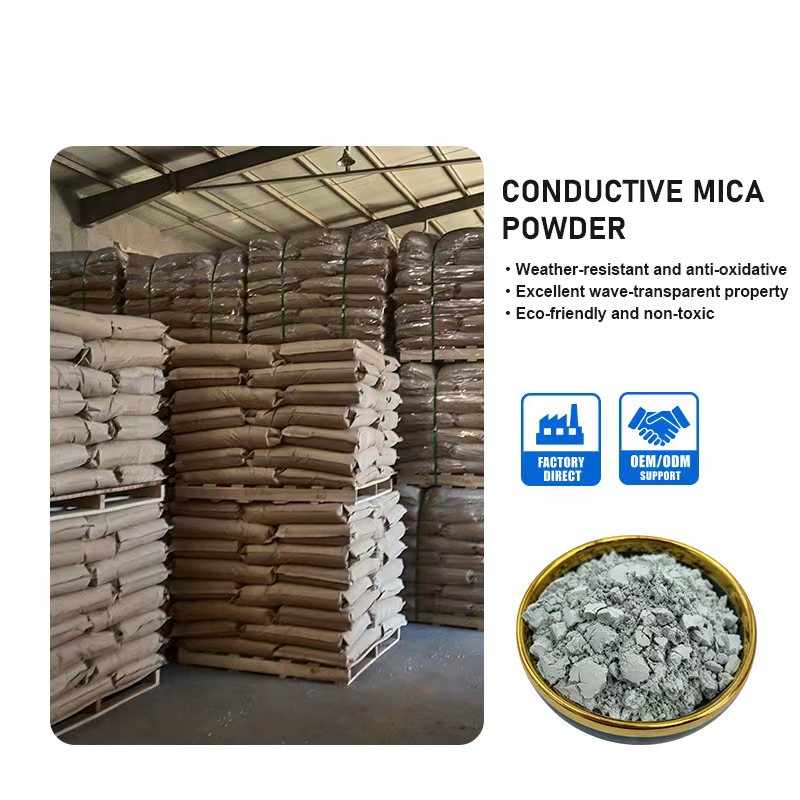
What Is Conductive Mica Powder
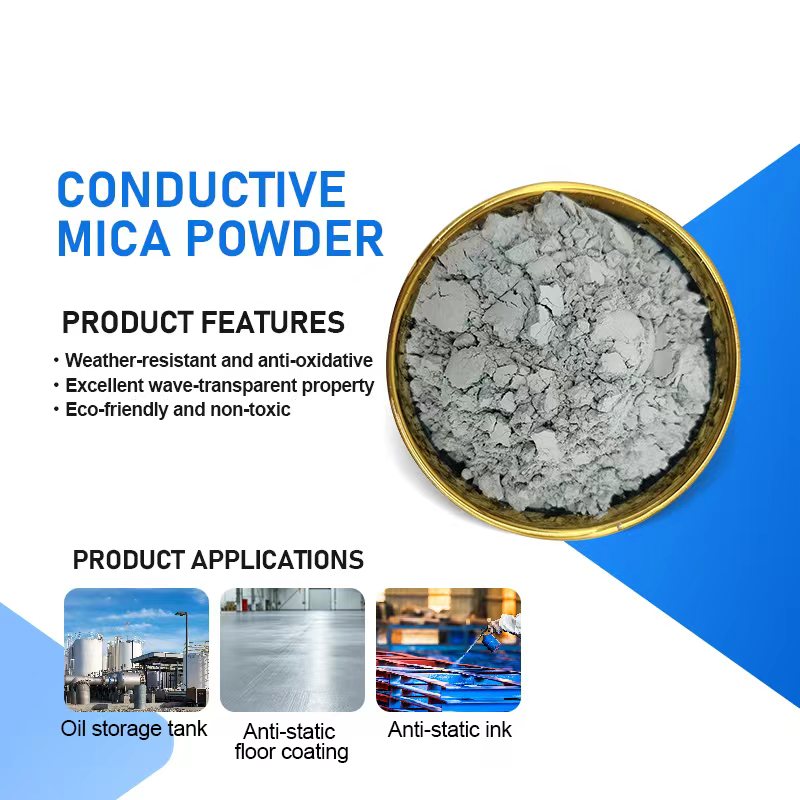
Ordinary natural mica is an insulating layered mineral that cannot conduct electricity or resist static charges. Conductive mica powder is a composite functional filler made by uniformly coating a durable conductive metal oxide layer on clean mica flakes. It combines mica’s natural merits—high temperature resistance, chemical inertness, layered shielding effect and low density—with reliable permanent anti-static and conductive properties. Compared with carbon black, graphite or pure metal conductive powders, conductive mica powder delivers smoother dispersion, lower oil absorption, stable color and better weather resistance, making it widely used in anti-static plastic housings, electromagnetic shielding coatings, conductive printing ink, anti-corrosion primer, electronic adhesive and rubber anti-static accessories.
Stage 1: Raw Mica Purification & Preprocessing Base Treatment
High-quality conductive mica starts with premium mica raw material. Most manufacturers select high-purity muscovite mica as the base substrate due to its bright white tone and intact sheet structure; dark phlogopite mica is only used for customized high-temperature resistant formulas. Raw mica ore contains mixed impurities like quartz, feldspar, iron oxide and clay, which will create blank spots on the conductive coating and cause inconsistent conductivity if not fully removed. Factories first run raw mica through automatic magnetic separators and gravity sorting equipment to strip metal and mineral impurities completely.
After impurity separation, clean mica chunks go through low-temperature calcination at 750–950°C inside rotary kilns. Calcination removes bound crystal water, surface organic dirt and trace soluble salts trapped between mica layers. This step roughens the mica sheet surface slightly, greatly boosting adhesion between the mica base and conductive coating film. Mica without calcination will suffer coating peeling once mixed with resin, paint solvent or plastic melt, leading to quick loss of anti-static performance later. Next, calcined mica enters airflow grinding machines to split large blocks into flaky powder of different particle sizes (10μm, 30μm, 50μm, 80μm). Airflow grinding preserves the complete flat sheet shape of mica without excessive crushing into tiny fragments, which is critical to retain the material’s shielding and barrier functions. Multi-layer vibrating screens classify powder by particle size, and oversized particles are recycled for regrinding to ensure uniform base mica particle distribution.
Stage 2: Slurry Mixing & Controlled Co-Precipitation Coating (Core Manufacturing Step)
The chemical coating reaction determines the conductive performance of the finished powder, and all operations are carried out under constant temperature and gentle stirring to guarantee even coating coverage. The mainstream conductive coating system uses tin-antimony composite oxide, which forms a transparent, long-lasting conductive film after high-temperature firing, with lower resistivity and far stronger outdoor weather resistance than single tin oxide or expensive silver coating.
Workers prepare two separate liquid materials first: conductive metal salt solution and mica suspension slurry. Stannic chloride and antimony chloride are dissolved in purified deionized water to form a mixed conductive ion solution, with mild pH regulators added to stabilize ion activity and avoid premature precipitation. Meanwhile, graded pure mica powder is poured into large reaction tanks filled with deionized water; medium-speed agitators stir continuously to fully disperse mica flakes and eliminate particle agglomeration. Clumped mica flakes cannot receive an intact conductive film, creating non-conductive weak points in the final product. The tank temperature is locked at 55–75°C to slow precipitation speed and enable uniform film growth on every mica sheet surface.
The conductive salt liquid and alkaline neutralizer are added dropwise into the mica slurry at a matched steady flow rate over 2 to 3 hours. Slow dripping allows tiny metal oxide crystals to precipitate evenly onto both sides of each mica flake, rather than forming independent loose oxide particles floating in the water. After the co-precipitation reaction finishes, the mixed suspension stands still for natural sedimentation to separate coated mica solids from waste liquid containing excess salt residues.
Stage 3: Multi-Round Washing, Filtration & Low-Temperature Drying
The coated mica sediment carries residual chloride ions, unreacted metal salts and alkaline waste from the reaction. If these impurities remain, they trigger yellow discoloration, chemical corrosion and fluctuating resistivity when mixed into coatings or plastic products, and weaken the finished goods’ salt spray resistance. Repeated deionized water washing and pressure filtration are therefore mandatory.
Filter presses extract solid mica filter cakes from the suspension, and continuous pure water circulation washes the cake repeatedly until discharged wastewater reaches neutral pH and chloride ions are undetectable. Each washing cycle flushes soluble impurities trapped inside the thin conductive oxide film. Fully cleaned filter cakes are sent to vacuum drying ovens at 110–170°C for dehydration. Vacuum drying prevents local overheating that damages the fresh conductive coating, removing all free moisture without cracking the mica sheet structure. After drying, the material becomes loose agglomerated blocks of pre-coated mica.
Stage 4: Medium-Temperature Calcination for Conductive Film Crystallization
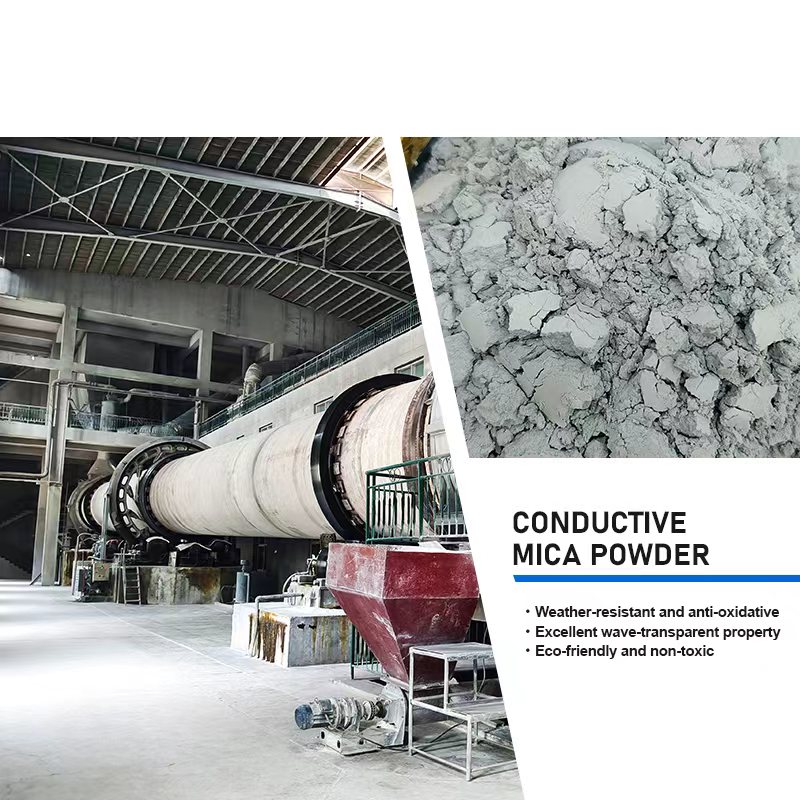
Dried coated mica blocks must undergo controlled high-temperature firing to convert loose amorphous metal oxide precipitates into dense crystalline conductive networks. Rotary firing furnaces maintain a stable temperature range of 480–680°C, with materials rotating slowly inside for 1.2 to 3 hours under adequate air circulation.
During firing, tin-antimony oxide microcrystals rearrange and connect tightly to form a continuous conductive layer covering the entire mica surface. Skipping this crystallization step results in fragile, easily scratched coating that sheds under friction or solvent contact, making the powder lose conductive capacity rapidly. Furnace temperature must be strictly controlled: overheating makes mica sheets brittle and fractured, while insufficient heat leads to incomplete crystal formation and excessively high resistivity. After firing, materials cool naturally at room temperature to avoid thermal shock damaging the integrated conductive film.
Stage 5: Gentle Dispersion Grinding, Sieving & Full Batch Quality Inspection
Cooled fired conductive mica lumps are processed by low-intensity airflow dispersers. Unlike the harsh grinding for raw mica, this step only breaks soft agglomerates formed during drying and firing, fully protecting the complete surface conductive film and flaky mica shape. Multi-stage precision screens separate the material into different particle size grades matching customer orders, removing hard undispersed agglomerates that fail dispersion tests.
Every finished batch undergoes complete lab testing before delivery. Core inspection items include volume resistivity (the key index of conductive performance), particle size distribution, whiteness, oil absorption, heat resistance, heavy metal content (RoHS compliance) and salt spray stability. Technicians also use microscopic observation to check coating coverage and confirm no bare mica surfaces without conductive film. Batches failing any test indicator are reprocessed through washing and firing instead of being shipped to clients. Only fully qualified conductive mica powder moves to packaging procedures.
Stage 6: Anti-Moisture Sealed Packaging & Standard Storage Guidelines
Qualified conductive mica powder is automatically packed into 25kg woven bags lined with moisture-proof anti-static inner plastic film; bulk ton bags are provided for large-volume industrial orders. Anti-static inner liners stop powder agglomeration caused by static electricity and block moisture absorption during long-distance transport and storage. Outer packaging clearly marks particle size, resistivity parameters, batch number, production date and storage reminders. Finished product warehouses maintain dry, ventilated constant-temperature conditions, with powder stacks isolated from damp ground and direct sunlight. Long-term humid storage will slowly oxidize the surface conductive film and raise resistivity, so manufacturers advise customers to seal leftover powder tightly after opening packaging.
Table of Contents
- What Is Conductive Mica Powder
- Stage 1: Raw Mica Purification & Preprocessing Base Treatment
- Stage 2: Slurry Mixing & Controlled Co-Precipitation Coating (Core Manufacturing Step)
- Stage 3: Multi-Round Washing, Filtration & Low-Temperature Drying
- Stage 4: Medium-Temperature Calcination for Conductive Film Crystallization
- Stage 5: Gentle Dispersion Grinding, Sieving & Full Batch Quality Inspection
- Stage 6: Anti-Moisture Sealed Packaging & Standard Storage Guidelines