EN
EN

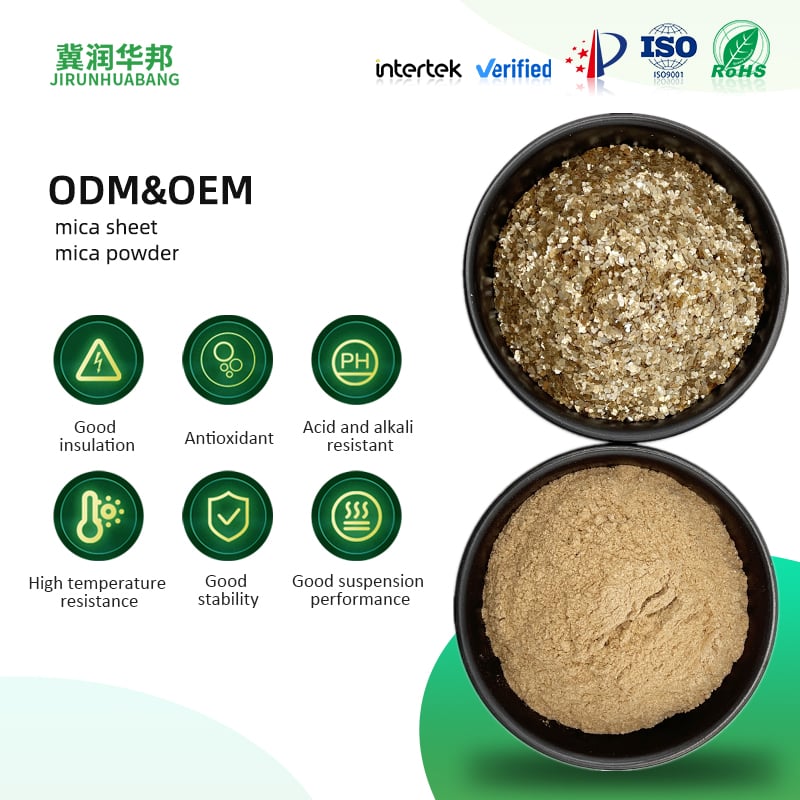
Mica powder is a widely used natural inorganic mineral powder with unique layered flaky structure, stable chemical properties, excellent weather resistance and high temperature resistance. It is a pure physical processed industrial material with no chemical additives, which makes it a popular functional filler in various industrial manufacturing fields. To help customers clearly understand this common mineral material, the following content simply and professionally introduces the natural origin, formation principle and complete industrial production process of mica powder.
Natural Origin of Mica Powder
Mica powder is totally derived from natural mica ore, a typical layered silicate mineral formed through hundreds of millions of years of geological crust movement and metamorphism. Mica minerals are abundantly distributed in nature, mainly produced in metamorphic rocks and igneous rocks of the earth’s crust. Under long-term high-temperature, high-pressure and geological extrusion environments, the original mineral components gradually crystallize and form stable sheet-shaped mica ore bodies with regular layered structures.
There are two main types of commercially applied natural mica ores: muscovite and phlogopite. Muscovite is the most common raw material for industrial mica powder, featuring pure texture, good luster, strong toughness and stable physical and chemical properties. Phlogopite has outstanding high-temperature resistance and thermal insulation performance, which is more suitable for high-temperature industrial scenarios. Both types of mica ores have natural layered structures, which can be processed into ultra-thin flaky powder after fine grinding, retaining the unique structural advantages of mica.
Different from synthetic chemical materials, mica powder is a 100% natural mineral raw material. The original mica ore is mined from professional mineral mines with rich mineral reserves and stable ore quality. After long-term geological evolution, natural mica ore has extremely stable molecular structure, no harmful components, strong acid and alkali resistance, and will not deteriorate or react with conventional industrial raw materials. This natural origin determines that mica powder has better durability and environmental friendliness than many synthetic fillers, and will not produce volatile substances or impurities during use.
Complete Industrial Production Process of Mica Powder
The production of mica powder is a pure physical processing process without chemical reaction and chemical addition. The whole process focuses on protecting the natural layered flaky structure of mica, avoiding structural damage, and improving powder purity, fineness and uniformity. The standardized production process includes seven core steps: ore selection and cleaning, primary crushing, coarse impurity removal, fine grinding (dry and wet process), particle classification, deep purification, and drying and finished product screening.
First step is ore selection and surface cleaning. After natural mica ore is mined, workers first conduct manual and mechanical sorting to remove large stones, soil, weathered inferior ore and other sundries that do not contain mica components. Only high-purity, complete and unbroken mica ore is selected as production raw material. Then the selected mica ore is sent to a professional cleaning device to wash away surface sediment, dust and residual impurities, ensuring the cleanliness of the original ore and laying a foundation for high-purity finished powder.
Second step is primary coarse crushing. The cleaned massive mica ore is transported to a jaw crusher for primary crushing. The large ore blocks are crushed into uniform small mica particles of 1-5cm. This step only reduces the volume of raw materials, and does not destroy the natural layered structure of mica, which is convenient for subsequent fine grinding processing. After coarse crushing, the material is preliminarily screened to remove fine soil and impurity powder generated during crushing to ensure the purity of coarse particles.
Third step is coarse impurity removal and preliminary sorting. The crushed mica particles are sent to a vibrating screening machine and magnetic separation equipment. The vibrating screen screens out uneven particle sundries, while the magnetic separator removes iron impurities and metal minerals mixed in mica particles. A small amount of iron impurities in natural ore will affect the whiteness and stability of mica powder. The magnetic separation process can effectively remove ferromagnetic impurities and greatly improve the purity of raw materials.
Fourth step is core fine grinding, which is divided into dry grinding and wet grinding two mainstream processes, aiming at different product fineness and usage requirements. Dry grinding is suitable for conventional medium and coarse mesh mica powder. The cleaned coarse mica particles are sent to hammer mills, roller mills or ultra-micro dry grinding equipment. Through high-speed impact and friction, the particles are ground into uniform powder. The whole dry grinding process is closed and dust-free, with high production efficiency, suitable for mass production of conventional industrial mica powder.
Wet grinding is applied for high-precision, ultra-fine mica powder with high flake integrity. Mica coarse particles are mixed with purified water to form a uniform suspension slurry, and then sent to a wet grinding mill for low-speed fine grinding. Different from dry grinding, wet grinding can protect the layered flaky structure of mica to the greatest extent, avoid flake breakage, and make the processed mica powder have more complete flake shape, higher aspect ratio and better luster and coverage. Ultra-fine mica powder used for high-end industrial fillers and coating materials all adopts wet grinding process.
Fifth step is precise particle classification. The ground mica powder has uneven particle size, so it needs professional classification treatment. According to different mesh standards (ranging from 20 mesh to 8000 mesh), the powder is classified by airflow classifier and hydraulic classifier. The equipment separates oversized particles and unground coarse materials, and returns the unqualified coarse materials to the grinding equipment for reprocessing. This step ensures that each batch of mica powder has uniform particle size and stable fineness, meeting the precise usage standards of different industries.
Sixth step is deep purification and fine impurity removal. After classification, the mica powder is further purified through flotation and secondary magnetic separation. Micro fine impurities, non-mica minerals and residual trace metal impurities in the powder are completely removed. Deep purification effectively improves the whiteness, purity and stability of mica powder, reduces impurity content to the lowest level, and ensures that the finished product will not affect the performance of downstream industrial products.
Seventh step is drying, final screening and finished product storage. For wet-ground mica slurry, it is first dehydrated by a filter press to form a filter cake with moderate moisture content, then sent to a constant-temperature drying equipment for low-temperature drying, which completely removes internal moisture and keeps the powder dry and loose. All dried mica powder will pass through the final precision screening machine to remove agglomerated particles and ensure uniform powder dispersion. After strict manual and mechanical quality inspection, qualified mica powder products are sealed and stored in a dust-free environment to prevent moisture absorption and pollution.
Process Advantages of Industrial Mica Powder
The whole production process of mica powder adopts pure physical processing technology, without adding any chemical agents, adhesives or additives, completely retaining the natural structural characteristics and chemical stability of natural mica minerals. The optimized grinding and classification process effectively protects the complete flaky structure of mica powder, enabling the product to have excellent shielding performance, luster, toughness and dispersion.
Modern mica powder production realizes full-process closed production, which not only ensures stable product quality and high batch consistency, but also meets environmental protection production standards. By adjusting grinding fineness and purification precision, manufacturers can produce mica powder of different specifications, from conventional coarse powder to ultra-fine micron-grade powder, to meet the diverse application needs of different industrial scenarios.
In short, mica powder is a high-quality natural mineral material derived from natural mica ore through scientific mining, screening, grinding and purification. Its simple and green physical production process, stable natural properties and diverse specification types make it an indispensable functional filler in modern industrial production, with reliable quality and wide industrial adaptability.