 EN
EN

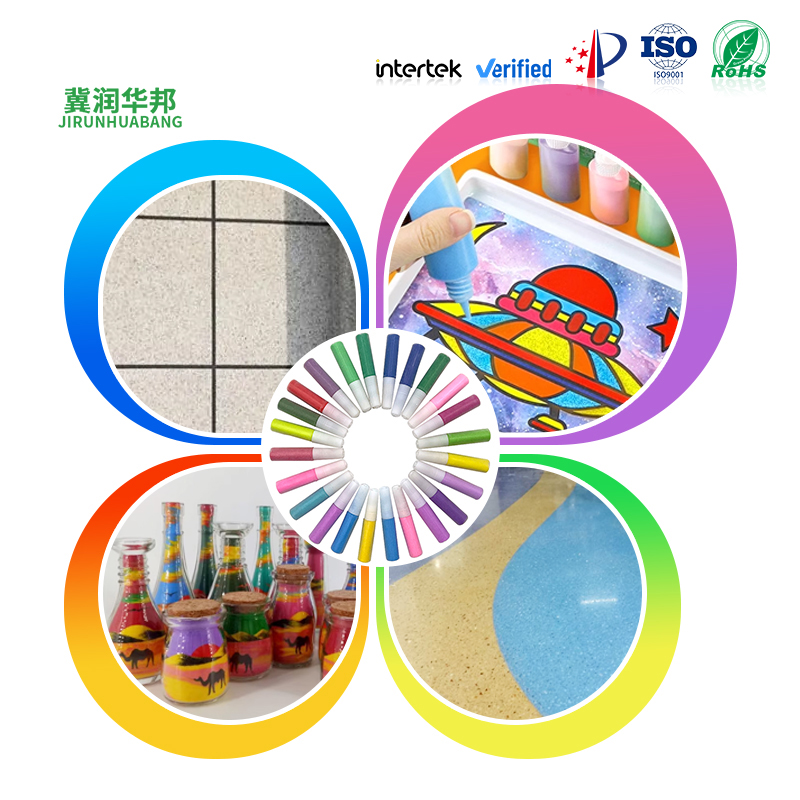
Colored Sand: A High-Performance Mineral Decorative Material
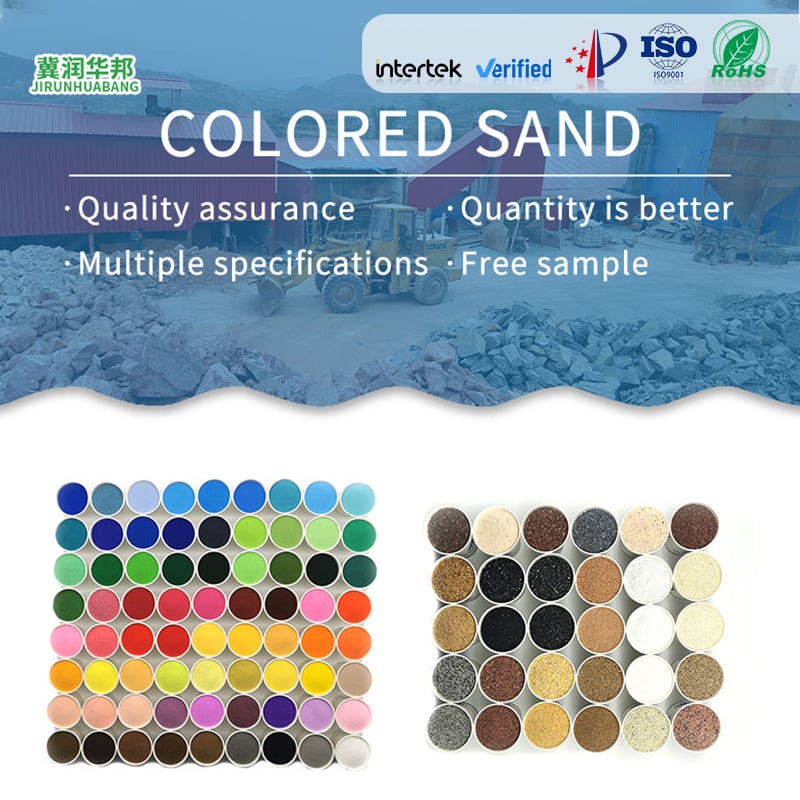
Colored sand, also referred to as pigmented aggregate, is a fine-grained mineral product widely adopted in modern building decoration, surface protection, and landscape engineering. It starts with high-grade natural mineral sources—such as purified quartz sand, crushed marble, and granite granules. Through strictly controlled physical processing steps, including precise sieving, deep cleaning, impurity separation, and professional surface coating with heat treatment, the raw stone is transformed into uniformly colored, clean, vivid, and well-shaped granules. Unlike conventional construction sand, which is mainly used for structural filling, colored sand is specifically engineered for surface finishing and functional enhancement. Its production process thoroughly removes dust, loose particles, and fragile grains, resulting in consistent particle size, a regular shape, and stable mechanical performance.
Based on the source material and manufacturing method, colored sand falls into two common categories: natural colored sand and thermally dyed colored sand. Natural colored sand keeps the stone’s original color and texture, offering soft hues, a natural appearance, and excellent long-term stability. Thermally dyed colored sand, on the other hand, uses environmentally friendly inorganic pigments combined with high-temperature sintering and color-locking technology. This approach produces bright, saturated, and highly customizable colors that can be tailored to specific design needs and various engineering specifications.
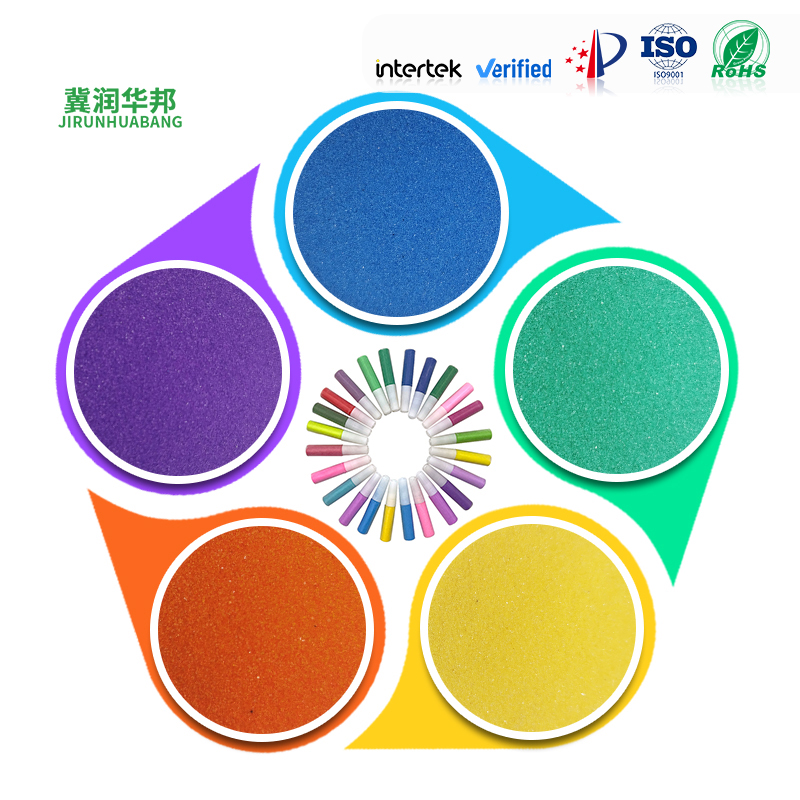
Key Advantages
Colored sand stands out among decorative materials thanks to its well-rounded and reliable performance. One of its most notable strengths is superb weather resistance and durable color retention. After high-temperature curing, the pigment bonds tightly to the mineral surface, effectively preventing fading, color change, or powdering. When used on exterior walls or outdoor paving, it withstands long-term sun exposure, temperature fluctuations, and rain erosion. Unlike many common decorative materials that may develop blotches, yellowing, or dusting, colored sand stays uniform and fresh-looking for years.
Physically, colored sand has a high mineral density and moderate hardness, giving it excellent compressive and abrasion resistance. Its compact internal structure handles daily foot traffic, routine cleaning, and prolonged outdoor aging without breaking down. This helps extend the service life of the finished surface and reduces the need for frequent repairs or replacements.
In addition to weather resistance and durability, colored sand also provides strong water repellency, anti-seepage, and anti-stain properties. The densely packed fine particles form a solid layer that blocks water penetration and protects the base material underneath. The smooth, dense surface resists dust, oil, and dirt accumulation. Most contaminants can be removed easily with water or light wiping, simplifying daily maintenance and lowering long-term costs.
From a safety and environmental standpoint, qualified colored sand is a green building material. It contains no heavy metals, toxic chemical additives, or volatile organic compounds—it is odorless and radiation-free. It does not irritate the skin or respiratory system, nor does it pollute the air or soil. This makes it suitable for both enclosed interior spaces (homes, schools, shopping malls, offices) and outdoor applications.
Construction and Compatibility
Colored sand offers excellent workability and broad material compatibility, which explains its widespread acceptance in the construction industry. It mixes stably with many common building and decorative materials, including water-based paints, epoxy resins, cement-based binders, adhesive mortars, and textured coatings. No adverse chemical reactions, delamination, peeling, or discoloration occur after blending. It preserves the original properties of the base material while adding decorative textures and protective benefits.
Moreover, colored sand is easy to handle during construction—mixing, spreading, and shaping are straightforward. It yields a high rate of finished quality and a low defect rate. It works equally well for large-scale standard projects and small custom designs, and it adapts to both manual application and mechanical spraying, ensuring high efficiency and uniform results.
Wide Range of Applications
The versatility of colored sand covers building decoration, flooring projects, landscape construction, and industrial auxiliary uses.
-
In the coating industry, it is a core raw material for making stone-like paints, artistic textured paints, exterior wall decorative coatings, and waterproof finishes. It can realistically imitate the natural grain and three-dimensional look of high-grade stone, turning plain walls into attractive stone-clad surfaces and elevating the building’s overall appearance.
-
In flooring, colored sand is widely used for anti-slip decorative floors, artistic epoxy floors, community walkways, garden paths, villa courtyards, and factory wear‑resistant, anti‑stain floors. It combines decorative appeal, safety, and long-term durability.
-
In landscaping and crafts, it appears in municipal landscape renovations, scenic area improvements, miniature landscape features, and handmade art fillings. Its natural texture and rich color options add depth and interest to various scenes.