 EN
EN

One of the toughest challenges of the concrete slab business is still plastic shrinkage cracking. These ugly and dangerous cracks form during the most vulnerable early curing stage, when bleed water from the concrete will rapidly escape through the surface, but not be replenished. Capillary tension generates internal stresses that cause surface cracks when the stresses increase beyond the concrete's tensile strength. Unless corrected, these cracks allow moisture and corrosive materials to work their way into the concrete matrix, causing faster deterioration and reducing the life expectancy of the concrete structure. The good news is that there is a tried and tested solution available that is proven and cost effective, polypropylene fiber reinforcement.
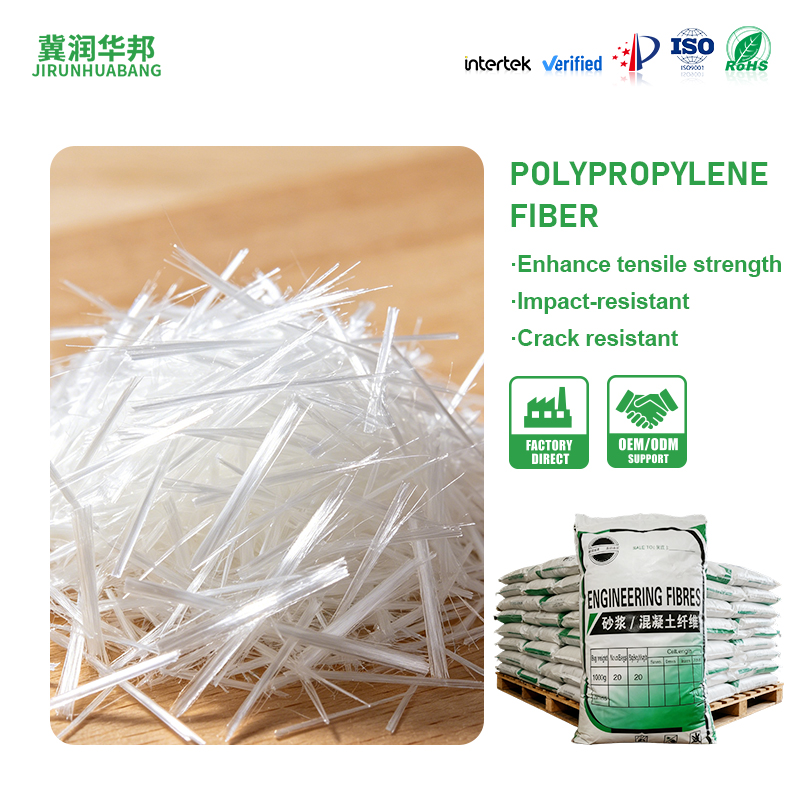
How Polypropylene Fibers Address Plastic Shrinkage
Polypropylene fibers act as a micro-reinforcement network in the concrete mix and change the response of the concrete to the stresses that occur in the early age of the concrete. The thousands of micro-fibers spread throughout the concrete provide internal 'bridges' between developing micro-cracks when shrinkage forces start to tear the concrete apart. This filling action slows down the propagation of cracks as soon as they start, so that any micro-cracks don't eventually form into cracks on the surface.
Such a protective mechanism has been consistently shown in research. Research indicates that polypropylene fiber reinforcement can greatly minimize the total crack area and maximum crack width of plain concrete slabs. The fibers are effective in blocking and spreading the stresses of the tensile forces which would otherwise concentrate at certain critical locations and lead to failure. Furthermore, the three dimensional network structure of the fibers, which results from such arrangement, contributes to the micro-structure of the concrete, thus affecting its resistance against autogenous and drying shrinkage.
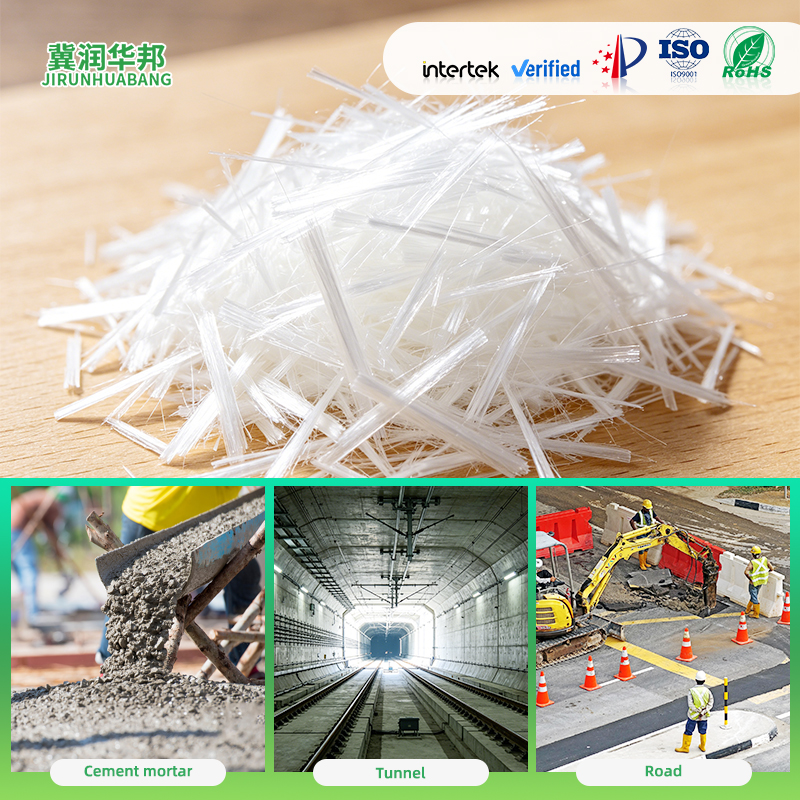
The Evidence: Quantifying Crack Reduction
The benefits of polypropylene fibers are not only anecdotal, they are scientifically proven. There is now solid quantitative evidence from recent studies. This study is an ASTM C1579 controlled investigation of concrete slabs where the polypropylene fibers had been dosed at 1,000 g/m³. Concrete slabs with polypropylene fibers at 1000 g/m³ showed a 32.43% reduction in the number of cracks, as well as an 18.41% decrease in average crack thickness and an 11.46% reduction in total length of crack length compared with unreinforced concrete.
The rest of the results support this performance. Addition of polypropylene fiber has been found to reduce dry shrinkage about 19.8%, with some mixes showing shrinkage reduction of up to 50% of that of the reference mixes. These enhancements directly translate to increased service life, decreased maintenance needs and increased long-term durability, which contractors and project owners are becoming more aware of.
Optimizing Fiber Dosage for Slab Applications
As with any reinforcement strategy, proper dosage is critical. Studies indicate that a moderate fiber content yields optimal results. Studies have reported that concentrations higher than a certain amount can cause clumping, loss of workability and a decrease in effectiveness; high amounts can even lead to an increase in porosity and to a decrease in compressive strength. The recommended amount of mix used for slurry seal/aftertreatment of slabs is commonly 0.1-0.3% by volume, which provides a compromise between crack control effectiveness and workability of the seal. The fibers are evenly distributed in the concrete, and the fibers can be used without needing to make many changes in the water-cement ratio and placement procedures.
Runhuabang Polypropylene Fibers: Engineered for Slab Performance
Runhuabang's polypropylene fibers are specially designed for the needs of concrete slab production. Our fibers are made using strict ISO 9001:2000 quality control procedures, ensuring the same quality and consistent performance from batch to batch. They are available in 3mm, 6mm and 9mm standard lengths and are dispersed uniformly and provide an effective three dimensional reinforcement network without adversely affecting slump or workability.
We strive to provide quality products, and our commitment to quality is not limited to raw material selection. Runhuabang has more than 25 years of manufacturing experience, a team of 20 R&D professionals, and complete in-house testing laboratories to guarantee that all polypropylene fiber shipments conform to the demanding industry requirements. We invite contractors, engineers, and concrete producers to experience the difference that premium fiber reinforcement can make in slab durability and performance. Talk to us about using Runhuabang polypropylene fibers to make your next project stronger.