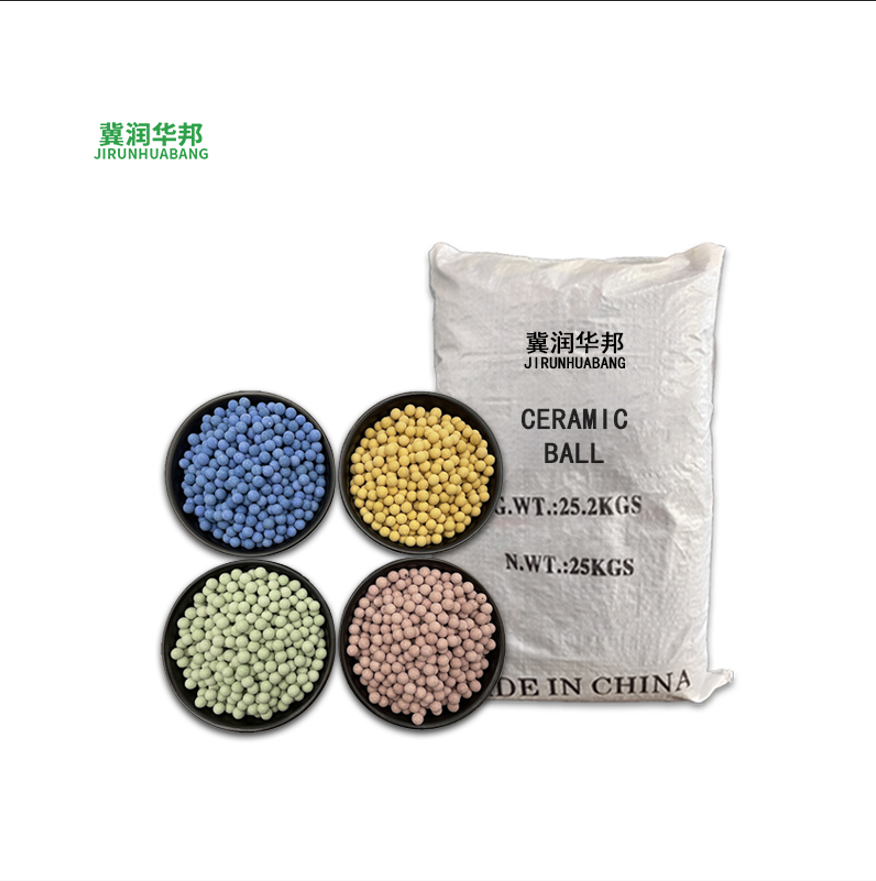
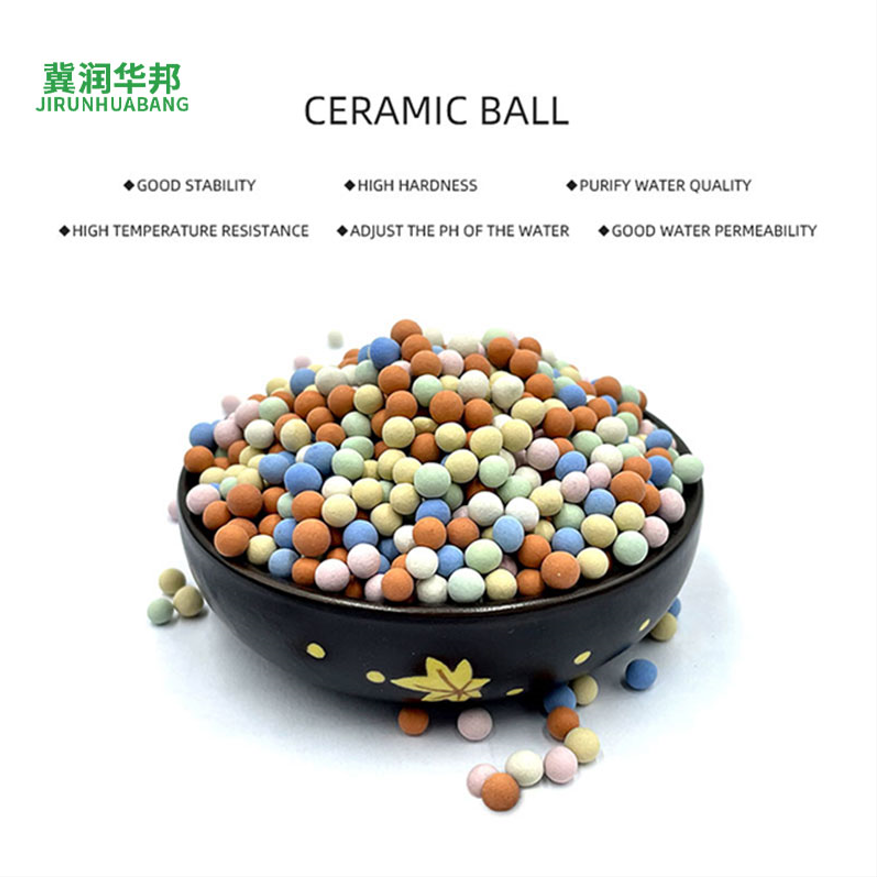
Ceramic balls are high‑performance inorganic spherical media widely used in fine grinding, chemical tower packing, filtration support and precision industrial processing sectors. Manufactured through high‑purity raw material batching, spray granulation, isostatic pressing, high‑temperature sintering, precision polishing and strict dimensional screening processes, these products feature regular spherical geometry, high bulk density and stable internal crystal structure. Different from ordinary glass beads, natural stone particles and metal balls, high‑grade ceramic balls achieve outstanding mechanical hardness and excellent chemical inertness through high‑temperature densification treatment, avoiding common defects such as easy wear, corrosion and particle impurity contamination. Featuring superior wear resistance, remarkable acid‑alkali resistance, high‑temperature stability and low contamination risk, ceramic balls have become irreplaceable core media for bead milling, chemical catalyst support, water treatment filtration and material surface finishing. As global chemical, coating and new‑material industries keep advancing fine processing and high‑purity production requirements, ceramic balls are widely adopted to replace traditional grinding and packing media. They help manufacturers reduce media wear loss, lower product impurity pollution and extend service cycle while optimizing comprehensive operating costs. Compliant with international industrial safety standards, non‑reactive and long‑life ceramic balls have gradually become preferred industrial media for modern high‑precision manufacturing worldwide.
The most prominent advantages of ceramic balls in industrial processing systems lie in their high mechanical hardness, low wear rate and stable spherical particle morphology. Compared with glass beads and metal grinding media, standardized ceramic balls possess high compression strength and good surface smoothness. During wet and dry grinding operations, they can deliver efficient impact and shearing force to disperse and pulverize pigments, mineral powders and chemical raw materials. Their low‑wear characteristic minimizes fine debris falling off from media itself, effectively preventing finished materials from being contaminated by foreign impurities. Process engineers can select ceramic balls of different diameters according to target fineness and equipment parameters, which will not cause abnormal equipment abrasion or interfere with grinding efficiency. Apart from grinding applications, uniform spherical shape creates well‑distributed void gaps when ceramic balls are stacked in tower vessels, supporting catalyst layers and allowing smooth fluid flow without easy blockage. Plenty of practical industrial cases prove that conventional media suffer from fast consumption and heavy impurity introduction; while premium ceramic balls combine grinding, supporting and filtering functions, greatly improving finished‑product purity and continuous‑production stability.
Excellent chemical inertness and thermal stability further consolidate ceramic balls’ competitive position in harsh‑condition industrial environments. After sintering densification, ceramic ball materials hardly react with most acidic, alkaline and organic chemical media. They maintain stable physical properties under long‑term liquid immersion and fluid scouring, free from corrosion, dissolution or structural pulverization. For chemical tower packing, high‑temperature reaction vessels and corrosive‑medium filtration systems that run under demanding working conditions, adopting ceramic balls can effectively prolong service life of packing layers, reduce frequent media replacement and cut down overall operation expenses. In terms of thermal performance, ceramic balls can withstand sustained high‑temperature working surroundings without softening, deformation or cracking. Even under repeated temperature alternation, their spherical dimension and mechanical strength remain steady. Such comprehensive performance makes them suitable for both low‑temperature wet grinding and high‑temperature chemical processing scenarios, ensuring reliable long‑term running of industrial facilities.
Fine material grinding, chemical tower packing and water‑treatment filtration represent major high‑value application scenarios for quality ceramic balls. Paint and ink bead milling, mineral powder ultra‑fine processing, petrochemical catalyst support, industrial water filtering and surface polishing all set strict requirements for media hardness, dimensional accuracy, chemical stability and impurity control. Size‑graded ceramic balls with consistent sphericity can realize uniform grinding force distribution or orderly stacking inside towers and filters. They show good physical compatibility with various liquids, gases and solid raw materials and produce no adverse chemical interaction, effectively avoiding quality risks including finished‑product discoloration, impurity mixing and packing layer collapse. Meeting global industrial safety specifications, inert ceramic balls are extensively applied in coating factories, chemical plants, new‑material production lines and environmental‑protection water‑treatment projects. Benefiting from rigid spherical structure, ceramic balls keep intact shape under heavy loading and high‑speed operation, showing reliable performance in continuous large‑batch industrial production.
With ongoing upgrading of global fine‑processing and chemical‑engineering standards, downstream industrial clients raise higher requirements for ceramic balls in sphericity accuracy, hardness control, impurity content and batch‑to‑batch consistency. Our company provides a full range of industrial‑grade ceramic balls tailored for grinding, tower packing and filtration‑support purposes. Our products feature high sphericity, low wear loss, strong corrosion resistance and stable batch quality, covering multiple diameter specifications to satisfy diverse equipment and process matching demands. Each batch of ceramic balls comes with complete inspection certificates and third‑party test reports, fully satisfying international industrial norms. We support bulk supply, custom‑size processing and technical consultation for process matching. We devote ourselves to assisting global industrial manufacturers to improve processing purity, reduce media consumption cost and achieve stable high‑quality production, delivering lasting practical value for downstream partners.
 Hot News
 EN
EN