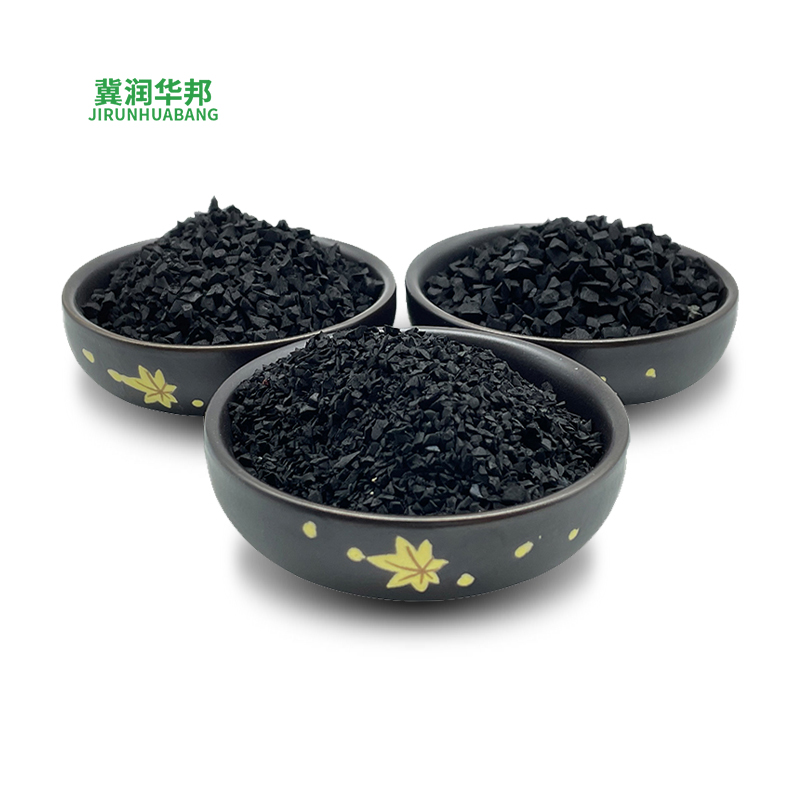
Rubber granules are recycled rubber granules made primarily from waste tires and waste rubber products. They are produced through multiple processes including crushing, pulverizing, screening, desulfurization, and impurity removal, making them a typical product of the circular economy. They possess characteristics such as good elasticity, wear resistance, slip resistance, aging resistance, low-temperature resistance, shock absorption and noise reduction, and environmental friendliness and non-toxicity. They are widely used in numerous fields including plastic running tracks, sports fields, rubber paving stones, waterproof building materials, rubber products, road modification, and landscaping. They are an important material for realizing the resource utilization of waste rubber and promoting green and low-carbon development.
I. Raw Material Sources and Production Process
The core raw materials for rubber granules are waste tires, waste rubber scraps, waste rubber hoses, rubber belts, and other industrial waste rubber. Resource recycling is achieved through a combination of physical crushing and chemical modification.
Main Production Process:
Sorting and Impurity Removal: Removing impurities such as metals, fibers, and sand to ensure granule purity.
Crushing and Grinding: Large pieces of rubber are crushed into granules of different sizes using crushers and grinding mills.
Screening and Grading: Grading is done according to mesh size or particle size, resulting in various specifications such as 1–3mm, 2–4mm, and 3–5mm.
Desulfurization and Modification (Reclaimed Rubber Granules): Low-temperature desulfurization restores some elasticity and plasticity, improving performance.
Drying and Packaging: After drying, granules are shipped in bags or bulk.
The entire process is pollution-free, energy-efficient, and highly efficient, truly turning waste into treasure.
II. Core Performance Advantages of Rubber Granules
High Elasticity and Shock Absorption: High rebound rate and good cushioning effect effectively absorb impact, protect joints, and improve walking and exercise comfort.
Super Wear and Aging Resistance: Wear-resistant, tear-resistant, UV-resistant, and resistant to high and low temperatures; does not powder, crack, or deform after long-term outdoor use.
Anti-slip and Safety: Rough surface and high friction prevent water accumulation and slippage in rainy weather, significantly improving the safety factor of the field.
Environmentally Friendly and Non-Toxic: Free of heavy metals and odorless, meeting environmental standards, suitable for public places such as schools, kindergartens, and parks.
Water- and Corrosion-Resistant: Non-absorbent, mildew-resistant, and resistant to acid and alkali corrosion, with a long service life and extremely low maintenance costs.
Color Stable: Can be made into red, green, blue, black, gray, and other colors with added masterbatch, providing uniform, long-lasting, and aesthetically pleasing colors.
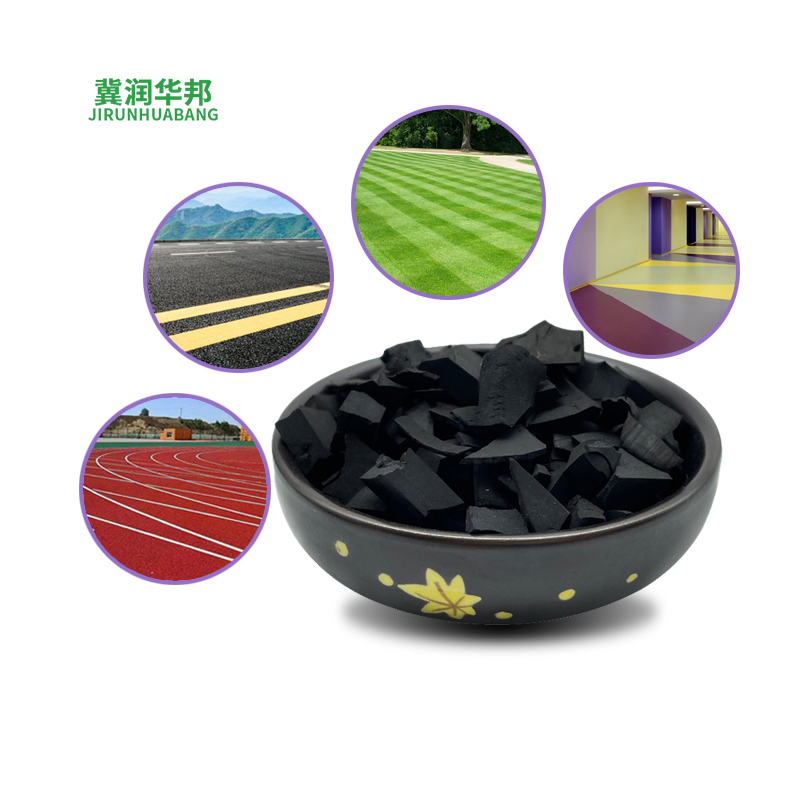
III. Main Application Areas
1. Sports Fields (Largest Application Market): Used for synthetic running tracks, basketball courts, tennis courts, volleyball courts, badminton courts, kindergarten activity areas, etc.
As an elastic layer, buffer layer, and surface granules, it provides safe, comfortable, and durable sports flooring, meeting the new national environmental protection standards.
2. Rubber Floor Tiles and Safety Mats: Produces gym mats, garage tiles, workshop anti-slip mats, stairwell shock-absorbing mats, pet mats, etc.
Sound insulation, shock absorption, anti-slip, and wear-resistant, suitable for high-intensity indoor and outdoor use scenarios.
3. Road Engineering and Building Materials: Added to asphalt to create rubber-modified asphalt, improving road surface crack resistance, wear resistance, and noise reduction.
Used in waterproof membranes, leak-sealing materials, and thermal insulation and soundproofing layers to improve toughness and aging resistance.
4. Landscaping and Landscape Engineering: Used as tree pit mulch, landscape walkways, rooftop greening drainage layers, and elastic filler for children's sandpits.
Water-retaining, breathable, weed-resistant, aesthetically pleasing, and durable, it's a more environmentally friendly alternative to sand and gravel.
5. Rubber Products and Industrial Parts: Recycled rubber granules can be used to produce rubber sheets, rubber pipes, sealing rings, vibration damping blocks, forklift mats, industrial foot pads, etc.
Reducing raw material costs while maintaining good mechanical properties.
6. Rail Transit and Vibration Damping Engineering: Used in rail vibration damping layers, sound insulation boards, and bridge buffer components to absorb vibrations, reduce noise, and improve operational stability.
IV. Environmental Value and Social Significance: my country generates a large amount of waste tires every year, and long-term stockpiling can easily cause environmental hazards. Rubber granules achieve 100% resource utilization of waste rubber, reducing black pollution, conserving petroleum resources, and lowering carbon emissions.
Compared to virgin rubber materials, rubber granules are lower in cost, more stable in performance, and more versatile, making them a green and environmentally friendly recycled material strongly supported by the state.
V. Market Development Trends
With increasingly stringent environmental policies, upgrades to sports facilities, and improvements in urban greening, the market demand for rubber granules continues to grow, exhibiting three major trends:
High-end: Environmentally friendly, odorless, high-strength, and high-resilience granules are becoming mainstream.
Standardization: Strict adherence to new national standards, with full compliance with heavy metal, VOC, and polycyclic aromatic hydrocarbon content limits.
Multifunctionality: Upgrading towards antibacterial, flame-retardant, high weather resistance, and ultra-wear-resistant properties.
Conclusion
Rubber granules are a typical representative of the circular economy, possessing multiple advantages such as environmental protection, safety, durability, and economy. From school tracks to city roads, from household floor mats to industrial parts, they are ubiquitous, playing an irreplaceable role. With green development becoming the mainstream, rubber granules, with their excellent performance and wide range of applications, will surely continue to release greater value in the field of new materials and become an important force in promoting the construction of a low-carbon society.
 Hot News
2026-03-17
2025-12-08
2025-12-06
2025-12-02

Runhuabang supplies non-metallic minerals, including iron oxide pigments, silica powder, kaolin, diatomite and zeolite and so on, with custom solutions worldwide.
H2-811, Poly International Building, Shifang Road, Chang'an District, Shijiazhuang, Hebei Province
Copyright © Hebei Runhuabang New Material Technology Co., Ltd All Rights Reserved Privacy Policy
 EN
EN