Core keywords: sepiolite fiber, asbestos substitute, rubber reinforcement filler, brewing decolorant, asbestos-free friction material, high-temperature textile blending
Sepiolite fiber, a rare natural hydrated magnesium silicate mineral, features a unique layered chain crystal structure with distinctive needle-like fiber morphology and interconnected tunnel-like micropores. These characteristics endow it with superior adsorption capacity, thermal insulation properties, corrosion resistance, and reinforcement capabilities compared to conventional minerals. Unlike asbestos—which also possesses fibrous structures—sepiolite fiber is non-toxic, odorless, and non-carcinogenic, making it the ideal green alternative material for asbestos in global industrial upgrading processes. Thanks to its exceptional comprehensive performance, sepiolite fiber has been widely applied across dozens of high-value industrial sectors including rubber products, food processing, friction materials, and textile manufacturing. With continuously tightening asbestos bans worldwide and domestically, the demand for asbestos-free alternatives has surged exponentially. Consequently, sepiolite fiber has emerged as a star raw material combining domestic market potential with export revenue-generating capabilities.
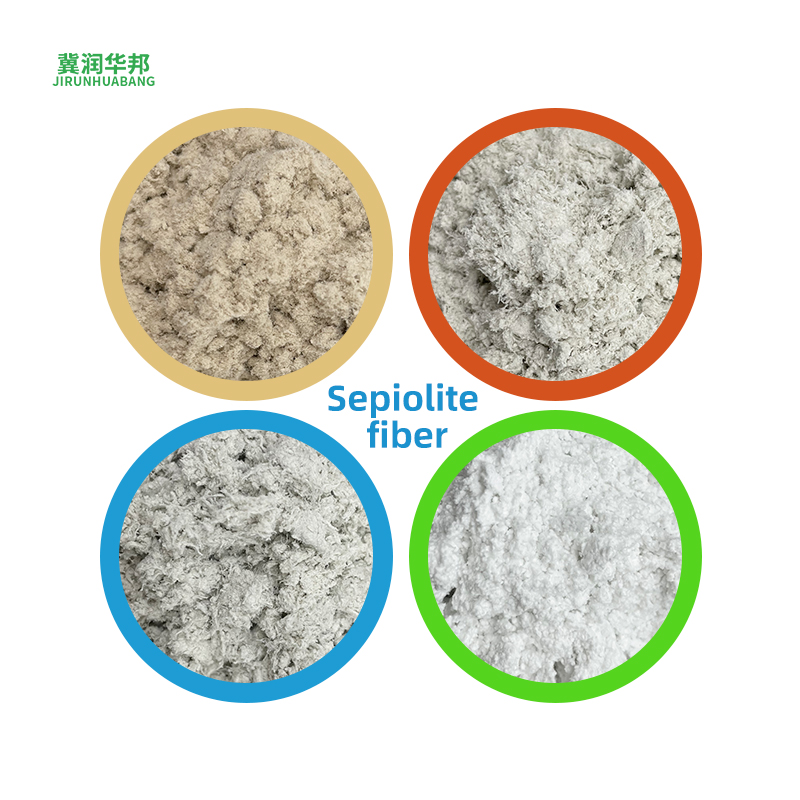
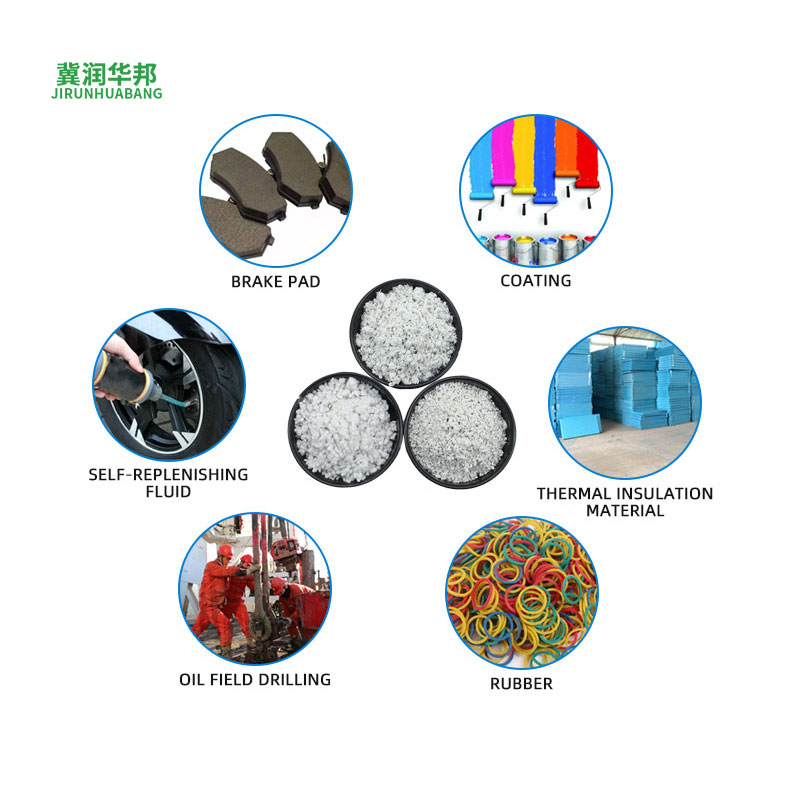
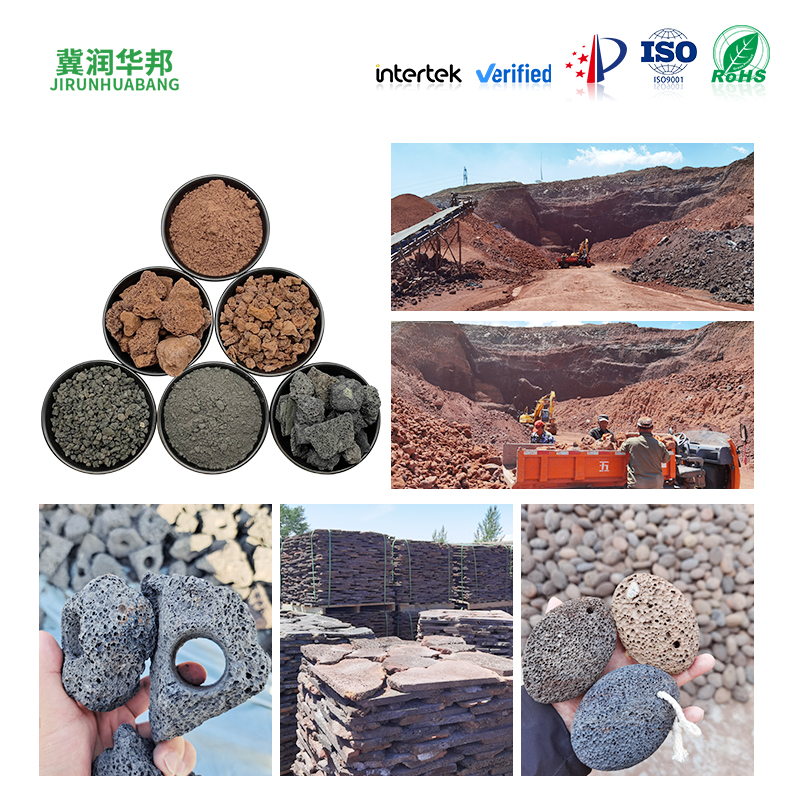
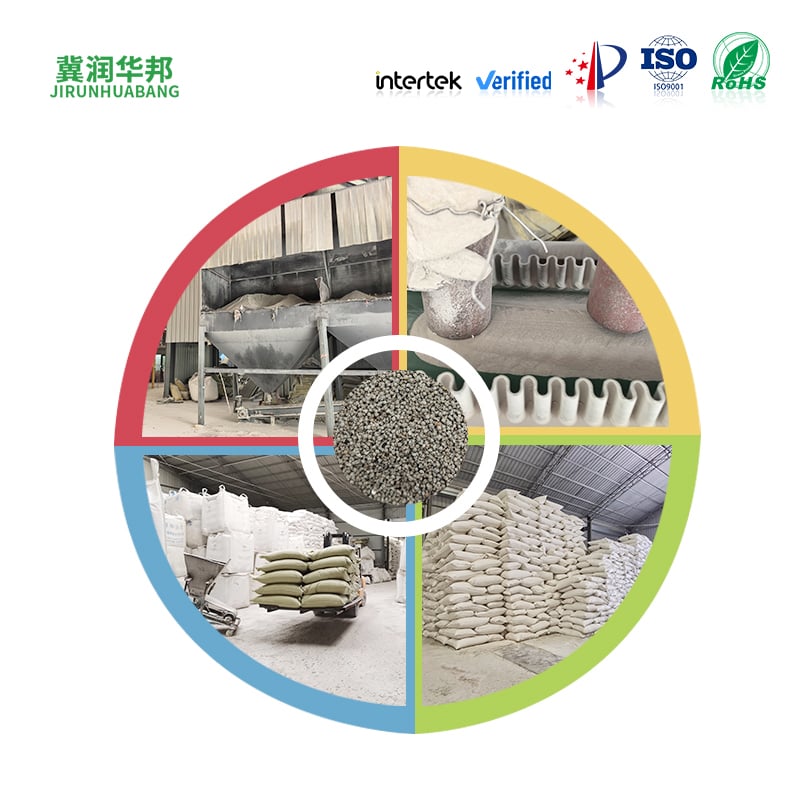
The production of industrial-grade sepiolite fibers begins with high-quality raw ore extraction, followed by a series of rigorous purification and processing procedures to ensure product stability and consistency. After ore mining, the material undergoes initial crushing and screening to remove surface soil and gangue impurities. Subsequently, specialized fiber separation processes employ mechanical combing and pneumatic classification to isolate fine sepiolite fibers from residual mineral particles, ensuring fiber length and purity meet industrial application requirements.
For high-end applications such as food processing and textile blending, we will further employ advanced surface modification technologies to optimize the interfacial compatibility between sepiolite fibers and other matrix materials. This treatment process not only enhances fiber dispersion in rubber, plastics, and textile blends but also significantly improves their adsorption capacity and heat resistance. Each batch of finished sepiolite fibers undergoes rigorous quality inspections, including fiber length distribution analysis, chemical composition testing, heavy metal content analysis, and safety certification verification. These measures ensure full compliance with national GB standards as well as international regulations such as EU REACH, RoHS, and FDA food-grade requirements, meeting all specifications for both domestic sales and export markets.
Over the past few decades, asbestos has remained the preferred functional filler in numerous industrial sectors due to its unique fiber structure and excellent thermal and mechanical properties. However, its carcinogenicity and severe environmental health risks have led to a global ban on asbestos use, compelling manufacturers to urgently seek reliable alternatives. Hydrotalcite fibers not only completely eliminate asbestos-related health hazards but also surpass asbestos in multiple core performance metrics, emerging as a superior solution for modern industrial applications.
First, sepiolite fibers exhibit a specific surface area of up to 350 m²/g, significantly surpassing asbestos (typically only 15 m²/g) and other common inorganic fillers. This exceptional property endows them with outstanding adsorption capabilities for impurities, pigments, and gas molecules, delivering superior purification and sound absorption performance compared to asbestos. Second, sepiolite demonstrates remarkable thermal stability with a melting point exceeding 1500°C, maintaining consistent physicochemical properties even at 1000°C—matching asbestos's heat resistance without posing health risks. Third, their unique needle-like fiber structure forms a stable reinforcement network in composite materials, substantially enhancing tensile strength, sealing performance, and structural stability. Additionally, their inherent chemical inertness ensures exceptional resistance to acid and alkali corrosion.
Leveraging these core advantages, sepiolite fibers have been successfully implemented across multiple key industrial sectors, addressing the limitations of traditional asbestos products and driving the green transformation of manufacturing.
In the rubber manufacturing industry, sepiolite fibers have become an irreplaceable functional filler for high-end sealing and corrosion-resistant rubber products. Traditional rubber fillers such as calcium carbonate and talcum powder can only provide basic filling effects, with limited reinforcement performance and poor corrosion resistance. Asbestos-based fillers have long been completely banned due to health risks.
Sepiolite fibers provide an ideal solution to these challenges. Their needle-like structure forms a three-dimensional reinforcement network within rubber matrices, significantly enhancing material density and interfacial bonding strength. This results in rubber products with exceptional sealing performance that maintains stability under high-pressure and complex operating conditions. The natural chemical stability of sepiolite also dramatically improves acid resistance—compared to conventional rubber products, sepiolite-reinforced rubber retains performance stability for over three years in highly acidic environments with pH values as low as 2, achieving 2-3 times longer service life than standard rubber products. Most importantly, sepiolite fibers are completely non-toxic and environmentally friendly, fully compliant with global asbestos-free regulations, making them an ideal raw material for chemical seals, automotive rubber components, and marine rubber applications.
In the brewing, beverage, and food processing industries, clarification and purification of liquid products are critical processes that determine product quality and shelf life. Traditional filtration media such as asbestos and diatomaceous earth have been widely used in this field for a long time, but both exhibit significant drawbacks: asbestos has been banned due to its carcinogenic properties, while diatomaceous earth demonstrates low adsorption efficiency and slow filtration rates.
Sepiolite fibers have emerged as the optimal alternative, achieving liquid decolorization and purification efficiency seven times higher than asbestos. This exceptional performance stems from their vast specific surface area and remarkable adsorption capacity. During brewing processes, sepiolite fibers efficiently remove residual pigments, unstable proteins, polyphenols, suspended solids, and other impurities from liquids without compromising the original flavor or nutritional components of alcoholic beverages. For instance, in beer production, sepiolite filtration enhances light transmittance by over 20% and extends shelf life by 30%, significantly reducing risks of turbidity and sedimentation during storage and transportation.
Furthermore, sepiolite fibers fully comply with FDA food-grade safety standards, with no harmful residues or heavy metal leaching, ensuring absolute food safety. Compared to traditional diatomite filtration, sepiolite filtration achieves 40% faster processing speeds, significantly enhancing production efficiency for brewing enterprises and reducing processing costs. This makes it the preferred purification agent for mid-to-high-end brewing companies worldwide.
The friction materials industry, encompassing automotive brake pads, clutch plates, and industrial friction components, stands as one of the largest markets for sepiolite fibers. As a core filler in friction materials, asbestos has long been utilized due to its excellent thermal stability and friction performance, but its carcinogenic risks led to its complete phase-out. Alternative fillers such as glass fibers and steel fibers each present distinct drawbacks: glass fibers accelerate brake disc wear, steel fibers are prone to rusting causing brake vibrations, while carbon fibers remain prohibitively expensive for widespread application.
Sepiolite fibers overcome all these drawbacks. With exceptional elasticity and uniform hardness distribution, they ensure consistent friction coefficients during braking, preventing excessive wear on mating components. Most importantly, their porous microporous structure delivers outstanding sound absorption—1.5 times higher than asbestos. This means sepiolite-based friction materials effectively absorb vibrations and noise generated during braking, significantly reducing brake noise and enhancing driving comfort, perfectly meeting the high NVH (Noise, Vibration, and Harshness) requirements of modern automotive industries.
Beyond these advantages, sepiolite fibers demonstrate exceptional high-temperature resistance. Even at 500°C operating temperatures, their friction coefficient decay rate remains only 5%, significantly lower than the 15% observed in glass fiber-based friction materials. This ensures stable and reliable braking performance under heavy-load high-speed conditions, substantially enhancing driving safety. With these outstanding properties, sepiolite-based friction products fully comply with international standards such as EU ECE R90 and US FMVSS 135, making them high-value-added export raw materials. Currently, domestic sepiolite fibers and related friction products have been exported to over 30 countries and regions worldwide, serving as a crucial foreign exchange source for the non-metallic mineral products industry.
In the textile industry, particularly in high-temperature functional textiles, sepiolite fibers have become the preferred alternative to asbestos. Traditional asbestos-based textiles such as fireproof fabrics, sealing gaskets, and high-temperature filter bags were widely used in industrial high-temperature environments. However, their carcinogenic properties have compelled the industry to undergo comprehensive upgrades.
Sepiolite fibers exhibit exceptional spinning properties and blending compatibility, enabling seamless integration with textile fibers such as polyester and aramid to produce high-performance functional textiles. The resulting sepiolite-blended fabrics demonstrate outstanding sealing performance and exceptional heat resistance, maintaining stability even at temperatures up to 800°C—far surpassing conventional organic fiber textiles. These materials serve as ideal raw materials for manufacturing high-temperature filter cloths, fire-resistant curtains, thermal insulation garments, and sealing packing materials.
For instance, sepiolite-based high-temperature filter bags are widely used in flue gas filtration systems at cement plants, power plants, and steel mills. With a service life twice that of conventional filter bags, they effectively capture fine particulate matter. Sepiolite fiber-made sealing packing has replaced traditional asbestos packing in petrochemical and thermal power plants, delivering reliable sealing performance under high-temperature and high-pressure conditions while posing no health risks to workers. The performance and safety of sepiolite fibers in the textile industry have been extensively validated internationally and widely recognized domestically, establishing them as the standard solution for asbestos-free high-temperature textile production.
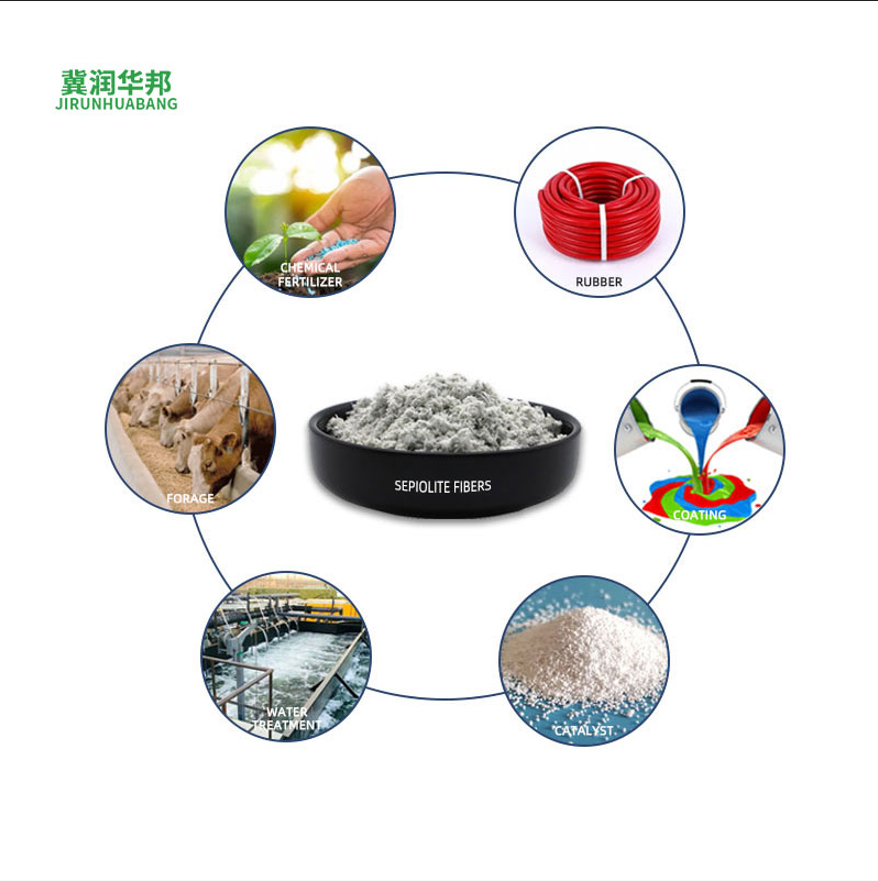
Against the backdrop of global environmental upgrades and comprehensive asbestos bans, the sepiolite fiber industry is experiencing unprecedented growth opportunities. To date, over 50 countries and regions have implemented asbestos usage restrictions, covering nearly all developed economies and major emerging markets. This has driven rapid demand for asbestos-free alternatives worldwide, with the market size projected to reach $12 billion by 2027 at a compound annual growth rate of 8.2%.
China, as a country rich in sepiolite mineral resources, has significant advantages in raw material supply and processing technology. Domestic sepiolite fiber products are highly favored by overseas customers due to their high quality, stable performance, and competitive prices, especially in the European, American, and Southeast Asian markets, where the demand for sepiolite fiber used in rubber, friction materials, and food processing is growing rapidly.
In addition, sepiolite fibers align with global trends in circular economy and low-carbon development. As a natural mineral material, they are non-toxic and recyclable, with a carbon footprint during production significantly lower than that of synthetic alternatives, making them an ideal raw material for green manufacturing. This will further expand their application scenarios and market potential in the future.
From high-performance rubber seals to premium brewing purification systems, from low-noise automotive friction materials to high-temperature functional textiles, sepiolite fibers seamlessly integrate environmental safety, superior performance, and cost efficiency, completely replacing asbestos in multiple core industrial sectors. They not only help manufacturers comply with stringent global environmental regulations but also significantly enhance product performance and added value.
As a professional supplier of non-metallic mineral products, we provide high-purity customized sepiolite fiber products compliant with international standards, supporting global manufacturers' green transformation and export operations. With the ongoing global asbestos-free movement, sepiolite fiber – this high-value-added export-oriented raw material – is poised to play an increasingly pivotal role in worldwide industrial supply chains.
 Hot News
2026-03-17
2025-12-08
2025-12-06
2025-12-02

Runhuabang supplies non-metallic minerals, including iron oxide pigments, silica powder, kaolin, diatomite and zeolite and so on, with custom solutions worldwide.
H2-811, Poly International Building, Shifang Road, Chang'an District, Shijiazhuang, Hebei Province
Copyright © Hebei Runhuabang New Material Technology Co., Ltd All Rights Reserved Privacy Policy
 EN
EN