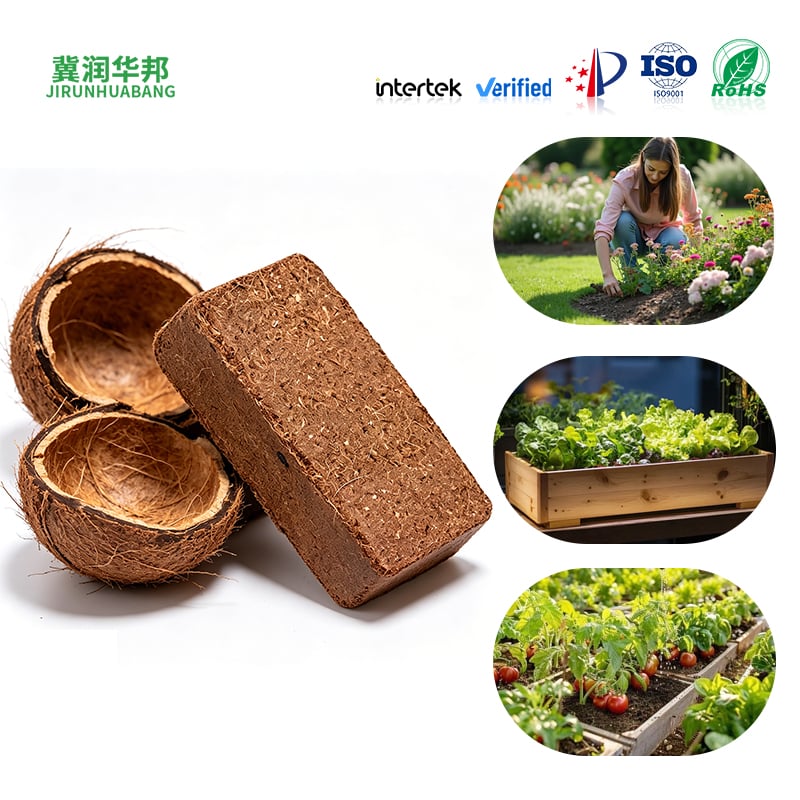
Coconut coir brick is a natural compressed growing medium made from processed coconut husk fiber. It is a lightweight, clean, and eco-friendly soil alternative designed for everyday home gardening and potted planting. Unlike regular garden soil that is heavy, clumpy, and full of hidden impurities, coir brick is free of weed seeds, bug eggs, and harmful microbes. Once soaked in water, it expands into soft, fluffy coir soil that creates a comfortable growing condition for almost all flowers, herbs, and vegetables. Thanks to its simple use and powerful planting performance, it has become a favorite gardening material for beginner and casual home growers.
The most practical function of coconut coir brick is optimizing pot soil structure to support steady plant growth. Ordinary soil will turn hard and compact after long-term watering. Hard soil stops water from draining properly and blocks fresh air from reaching plant roots. Plants grown in such soil often suffer from slow growth, yellow leaves, and easy root rot. Mixed into old or heavy soil, coir loosens the whole soil structure, creates tiny air holes, and improves drainage and ventilation. It keeps pot soil soft all year round, allowing roots to grow freely, breathe easily, and absorb water and nutrients more efficiently.
Superior water retention is another standout feature of coir brick. The natural fiber structure of coconut coir can hold a large amount of water and release moisture slowly and evenly. This feature prevents the soil from drying out too fast, greatly reducing the frequency of watering. For people who are busy or often forget to water plants, coir soil is a perfect solution to keep plants fresh and healthy. At the same time, it never stores excess water, effectively avoiding common problems such as root drowning, moldy soil, and rotten roots caused by overwatering.
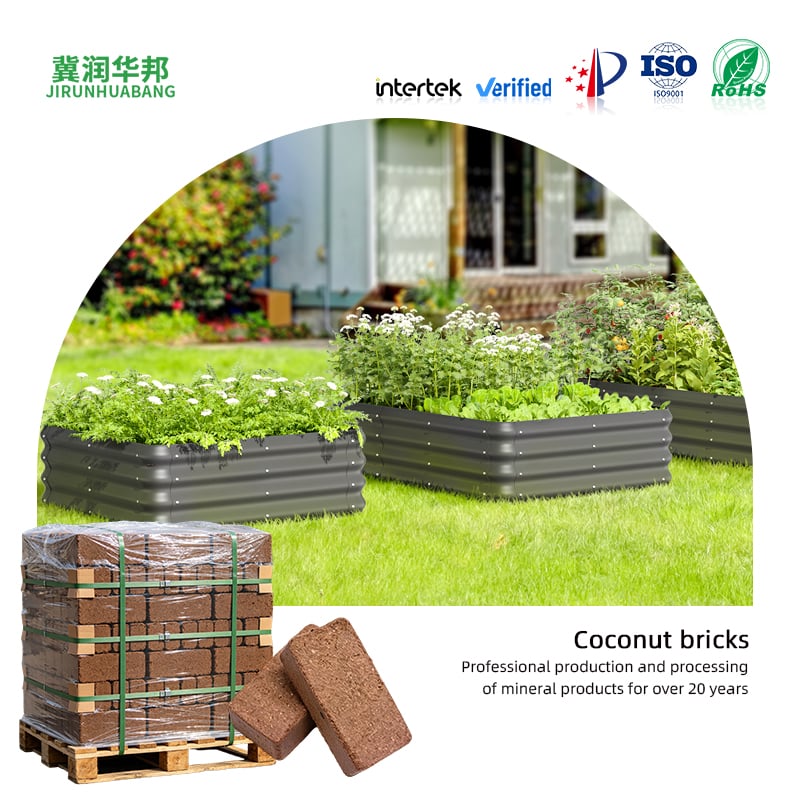
Coconut coir brick works perfectly for flower planting and indoor greenery maintenance. It fits nearly all common household plants, including leafy green plants, flowering plants, and succulent varieties. For foliage plants that love moist and soft soil, coir provides a mild and stable growth environment to keep leaves green and vibrant. For flowering plants, it promotes root development, helps more buds form, and extends the flowering period. For succulents and drought-resistant plants, mixing coir with granular materials balances moisture and drainage, creating an ideal dry-wet circulation that keeps succulents plump and healthy.
It is an excellent medium for herb and vegetable planting on balconies and indoors. Small potted vegetables and herbs such as chives, mint, basil, lettuce, and spinach have delicate root systems that cannot survive hard, waterlogged soil. Coir-based planting soil is light, breathable, and clean, which helps vegetable seedlings take root quickly and grow vigorously. Home vegetable planting with coir produces fresher, greener plants with fewer pest problems. Besides, coir soil has no unpleasant odor and rarely attracts small insects, making indoor and balcony planting cleaner and more comfortable.
Coir brick is highly recommended for seed germination and plant propagation. Pure expanded coir soil has fine and uniform texture, which will not bury delicate seeds or hurt young tender roots. It offers a sterile, safe, and warm environment for seed sprouting, greatly raising the germination rate of flower and vegetable seeds. For plant cutting propagation, the balanced moisture and air permeability of coir helps cuttings grow new roots faster and lowers the risk of branch rot and wither, making plant reproduction much easier for beginners.
This multi-purpose gardening material also serves well in daily plant maintenance. It is the best filling soil for repotting and transplanting. When replacing pots for grown plants, coir can fill the gaps around root balls, protect fragile roots from damage, and help plants adapt to new soil faster and recover in a short time. It can also be used as top dressing soil to cover pot surface, lock soil moisture, prevent soil splashing during watering, and improve the overall look of potted plants.
Easy operation makes coir brick suitable for every gardener. Simply soak the dry brick in clean water, and it will fully expand into loose coir soil in a short time. Squeeze out extra water before use, and it can be used alone or mixed with common nutrient soil and organic fertilizer. Since coir mainly improves soil environment rather than supplying rich nutrients, matching it with simple fertilizer can provide enough nutrition for continuous plant growth. Overall, coconut coir brick is a cost-effective, clean, and practical gardening essential that solves most daily planting problems and greatly improves planting success rate.

 Hot News
 EN
EN