 EN
EN

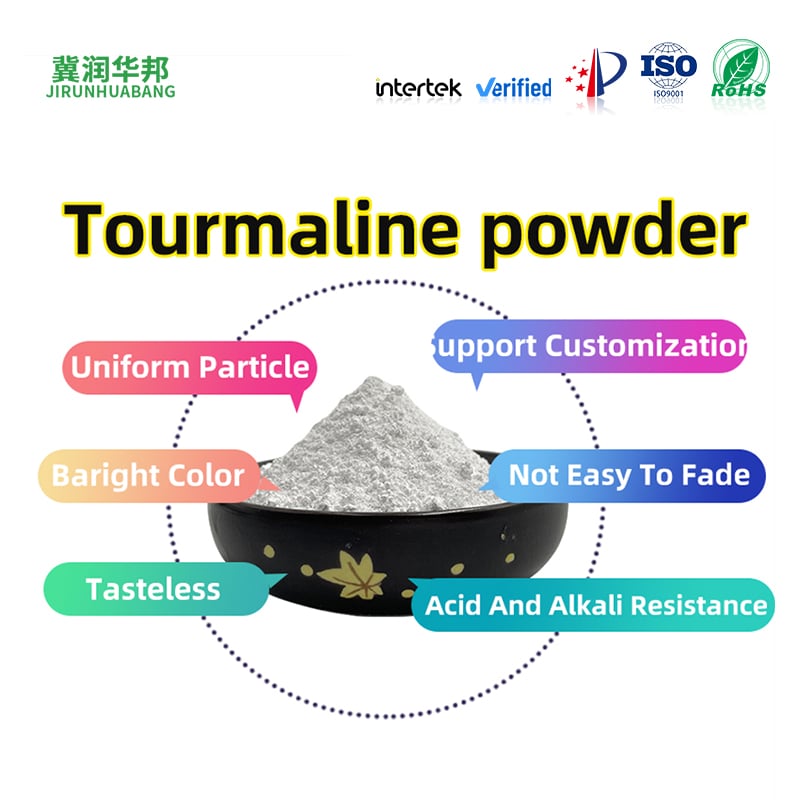
Tourmaline is a natural and structurally stable silicate mineral with outstanding chemical inertness, high hardness and strong corrosion resistance. After professional physical processing procedures including crushing, washing, impurity removal, ultra-fine grinding and precise particle size classification, tourmaline ore is processed into high-purity mineral particles and powder suitable for industrial water treatment scenarios. As a safe, stable and environmentally friendly functional mineral material, tourmaline has unique physical adsorption and structural filtration characteristics, which make it widely applicable in industrial sewage treatment, circulating water conditioning, domestic water preliminary purification and water quality stabilization projects. Different from traditional chemical water treatment agents that are prone to secondary pollution, tourmaline relies entirely on its own mineral physical structure to optimize water quality, featuring no chemical residue, stable long-term effect and low operating cost, making it an ideal auxiliary material for modern green water treatment systems.
One of the core applications of tourmaline in the water treatment industry is physical adsorption and impurity removal of industrial wastewater. A variety of industrial production processes generate wastewater containing suspended particles, fine sediment, colloidal impurities and residual organic pollutants. These tiny impurities are difficult to completely remove by conventional simple filtration methods. Tourmaline particles have a unique porous microscopic structure and large specific surface area, which can efficiently adsorb suspended colloids, fine particulate matter and dispersed organic impurities in water flow. When wastewater passes through tourmaline filter material layers, the disordered tiny impurities in the water can be firmly captured and locked by the mineral structure, effectively reducing water turbidity and clarifying turbid water quality. This physical adsorption effect is stable and controllable, avoiding the problem of excessive chemical dosage and residual pollutants caused by traditional flocculants, and greatly improving the purification efficiency of preliminary water treatment processes.
Tourmaline plays a key role in water quality stabilization and industrial circulating water conditioning. In industrial production, a large amount of circulating water is used for equipment cooling and production auxiliary links. Long-term circulating operation will lead to the accumulation of soluble impurities, gradual deterioration of water quality, and easy generation of scaling and sediment deposition inside water pipes and equipment. Tourmaline mineral materials can effectively optimize the activity of water body, disperse accumulated tiny sediment particles in circulating water, and inhibit the mutual aggregation and precipitation of soluble impurities. It can effectively reduce the formation of hard scale on the inner wall of pipelines and equipment, maintain the smooth flow of circulating water pipelines, and reduce equipment failure and heat transfer efficiency reduction caused by pipeline scaling. At the same time, tourmaline can stabilize the pH value of conventional industrial water, avoid abnormal water quality fluctuation caused by long-term circulation, and maintain the stable operating state of industrial circulating water systems for a long time.
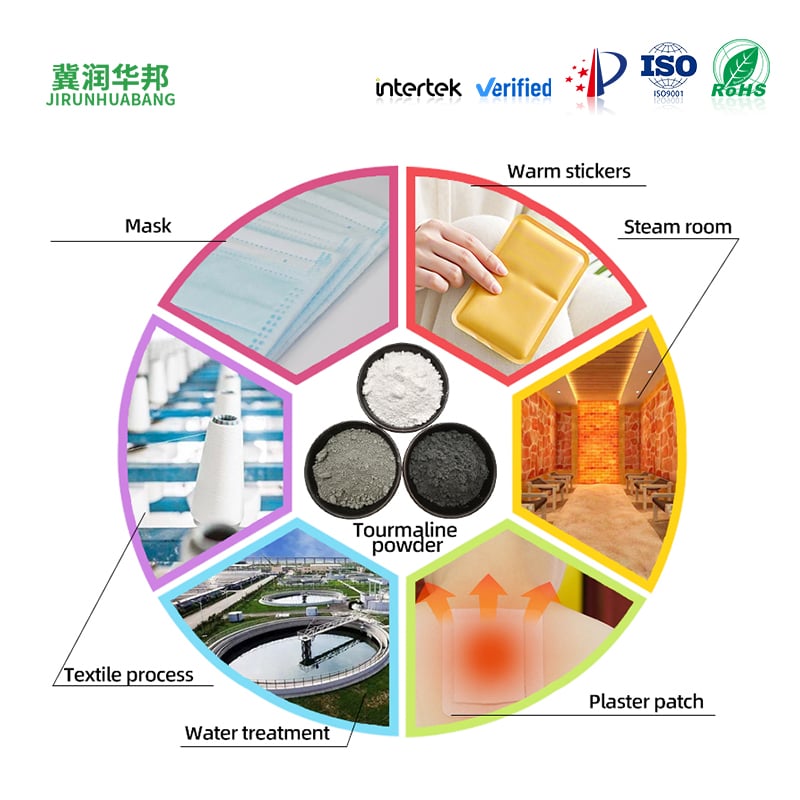
In the advanced purification stage of water treatment, tourmaline is often used as a composite filter material to improve the overall filtration grade of water treatment systems. It can be used in combination with quartz sand, activated carbon and other conventional filter materials to form a multi-stage composite filtration system. Tourmaline particles can fill the structural gaps of traditional filter materials, make the overall filter layer structure more compact and uniform, and make up for the defect that single filter material is insufficient in intercepting ultra-fine impurities. The composite filter material formed by tourmaline can effectively improve the interception accuracy of the water treatment system, remove residual trace suspended matter and fine impurities in the water, and further improve the clarity and cleanliness of the water body. In addition, tourmaline has excellent wear resistance and structural stability, will not deform, powder or deteriorate after long-term water immersion and repeated water flow impact, and has a long service life as filter material, which can effectively reduce the frequency of filter material replacement and the overall operation cost of water treatment projects.
Tourmaline is also widely used in pretreatment and tail water optimization of various industrial sewage treatment projects. Many industrial sewage contains trace heavy metal ions and soluble inorganic impurities, which are difficult to be completely removed by conventional sedimentation and filtration processes. Tourmaline has a stable ion adsorption and capture effect, which can effectively adsorb and fix trace heavy metal impurities in sewage, reduce the content of soluble harmful ions in water, and make the tail water quality more stable and up to standard. Compared with chemical precipitation agents, tourmaline will not introduce new impurity components into the water body, and will not cause secondary pollution to the water environment. After saturation of adsorption, tourmaline filter material can be regenerated through simple backwashing and physical cleaning, realizing repeated cyclic use and greatly improving the economic benefit of water treatment operations.
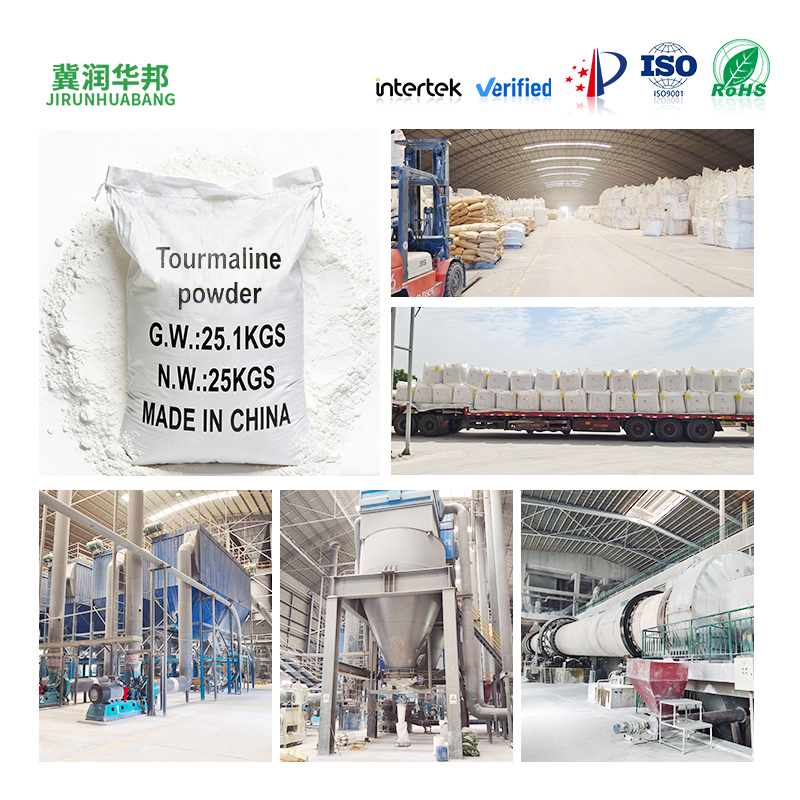
All water treatment applications of tourmaline adopt pure physical purification modes, without any chemical addition and chemical reaction participation. The mineral material itself is safe, environmentally friendly and non-toxic, with stable performance and no attenuation in long-term operation. With the increasingly strict industrial water quality discharge standards and the continuous upgrading of green environmental protection treatment technologies, tourmaline composite filter materials have been widely promoted in many water treatment fields such as industrial sewage treatment factory stations, factory circulating water systems, community water pretreatment and comprehensive water quality improvement projects. It has become a high-efficiency, energy-saving and low-consumption functional mineral material indispensable in the modern water treatment industry.