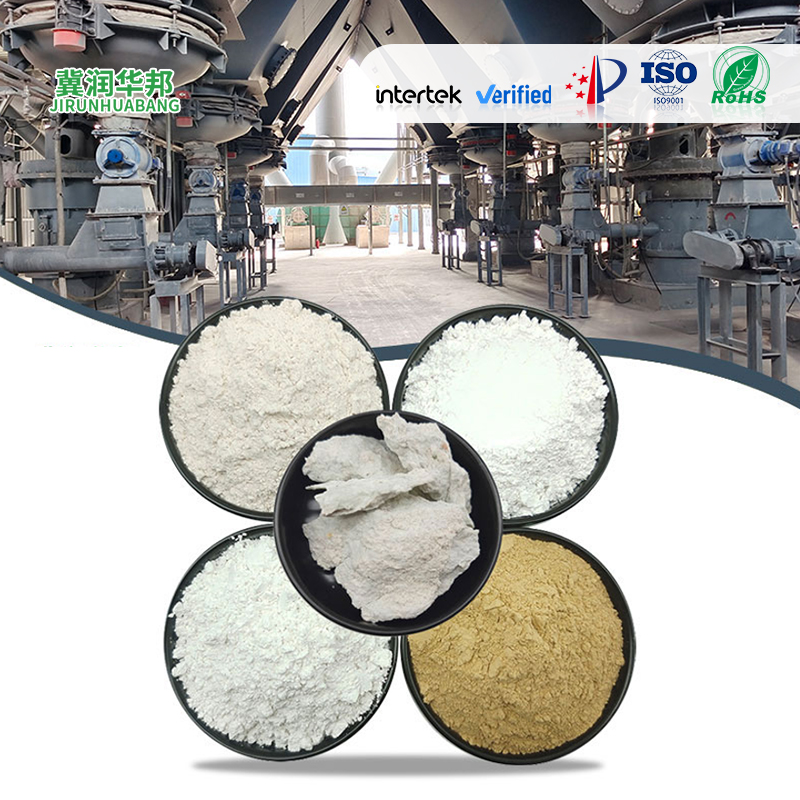
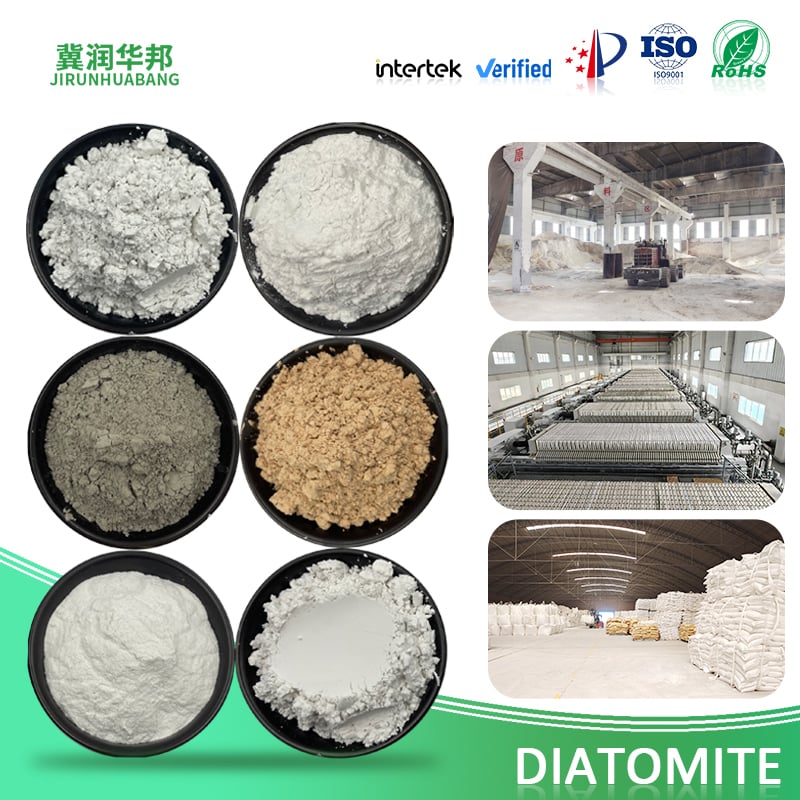
Diatomite, hailed as “nature’s miraculous porous material”, is a natural mineral formed over millions of years from fossilized remains of diatoms—single-celled algae that once flourished in ancient lakes and shallow seas. Its distinctive geological formation endows it with extraordinary physical and chemical properties, establishing it as a widely applied material across global industries.
Diatoms are microscopic organisms with silica-rich cell walls highly resistant to decomposition. Upon death, their siliceous frustules sink to the waterbed and accumulate into thick layers. Over millennia, these layers undergo compaction and mineralization, evolving into diatomite deposits while preserving their delicate porous structure intact.
The formation of diatomite demands specific geological conditions: a shallow water basin, abundant silica sources, and a stable water environment—all critical to protecting diatoms’ fragile siliceous frustules. Today, high-quality diatomite deposits are distributed worldwide, with notable reserves in China, the United States, and Europe. Though these deposits differ in purity and structural features, they all retain diatomite’s core trait: a highly porous structure.
Diatomite’s exceptional properties derive from its biogenic fossil structure, distinguishing it from other synthetic and natural materials. Its core characteristics include:
These combined properties make diatomite an extremely versatile material. It efficiently filters micro-particles and adsorbs pollutants, while acting as a high-performance filler to upgrade product quality and functionality.
Diatomite has an extensive application scope and has become an indispensable material across numerous industries, spanning daily necessities to high-tech manufacturing. Its key applications are as follows:
As a natural filter aid, diatomite’s porous structure captures particles as small as 0.1–1.0 microns via mechanical sieving and electrostatic adsorption. It is widely used in:
Diatomite’s strong adsorption capacity makes it an ideal solution for addressing water, air, and soil pollution:
Diatomite’s lightweight and superior thermal insulation properties make it a valuable building material:
Diatomite also plays a vital role in various other industrial sectors:
Not all diatomite is equal—its performance depends on purity, pore structure, and processing methods. When selecting diatomite, prioritize these key criteria:
As a direct diatomite manufacturer, we strictly adhere to these quality standards. Our products undergo rigorous quality control, with every batch tested for silica content, pore distribution, and heavy metal residues to meet global industrial requirements.
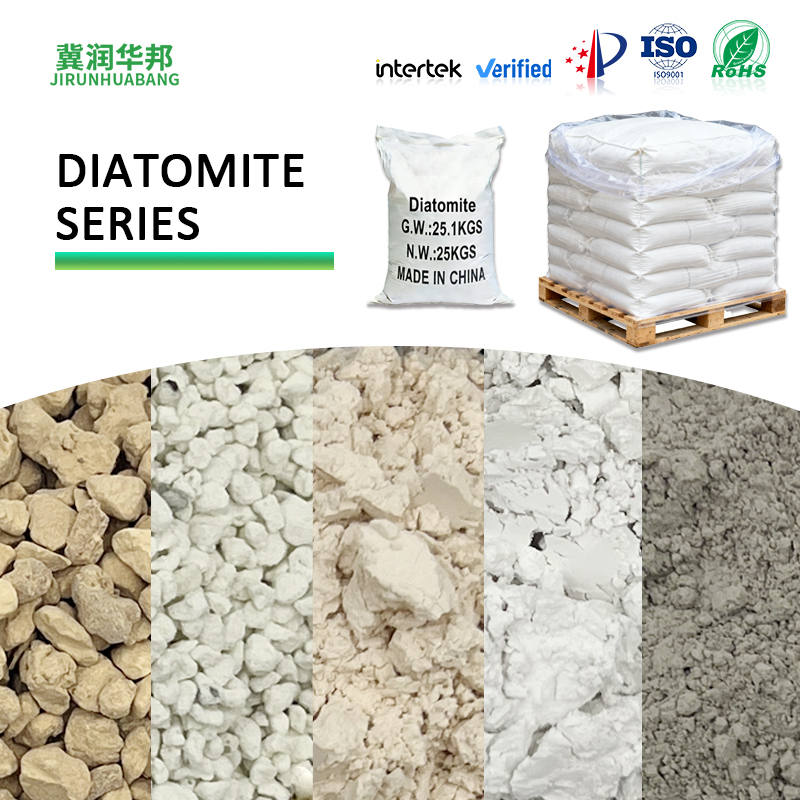
Diatomite outperforms common filtration and adsorption materials like quartz sand and perlite in key performance metrics:
The optimal material choice depends on specific application needs, but diatomite is unrivaled for projects requiring a balance of filtration precision, sustainability, and reliability.
From purifying drinking water and protecting the environment to boosting industrial efficiency and enabling green construction, diatomite’s natural origin and exceptional performance make it an indispensable global material.
As a trusted supplier with direct access to mineral reserves, we provide tailor-made diatomite solutions for filtration, environmental protection, construction, and other fields. All our solutions undergo rigorous testing and verification, complying with global quality and regulatory standards.
 Hot News
2026-03-17
2025-12-08
2025-12-06
2025-12-02

Runhuabang supplies non-metallic minerals, including iron oxide pigments, silica powder, kaolin, diatomite and zeolite and so on, with custom solutions worldwide.
H2-811, Poly International Building, Shifang Road, Chang'an District, Shijiazhuang, Hebei Province
Copyright © Hebei Runhuabang New Material Technology Co., Ltd All Rights Reserved Privacy Policy
 EN
EN