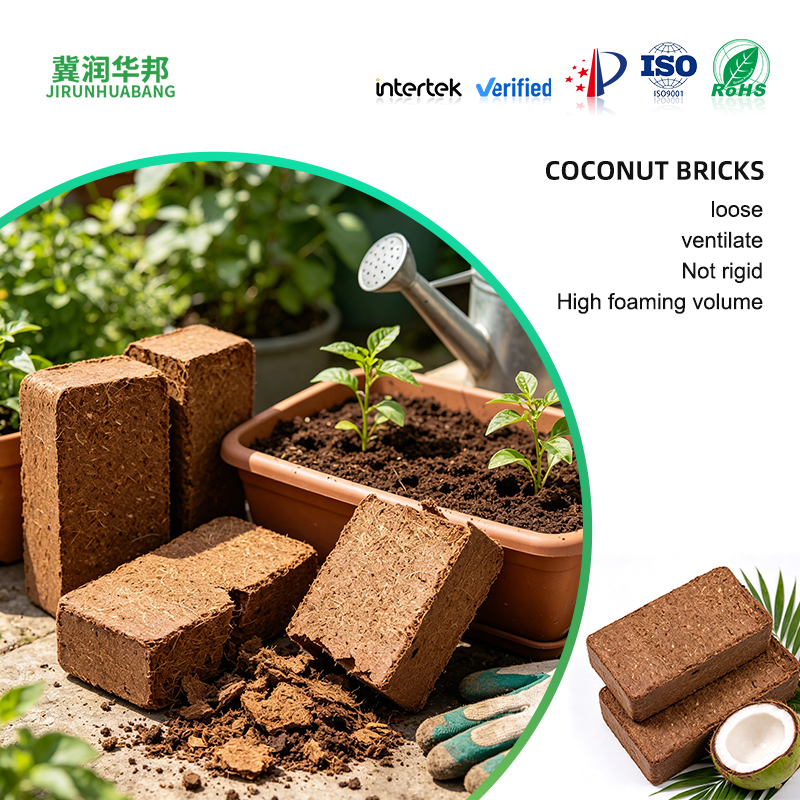
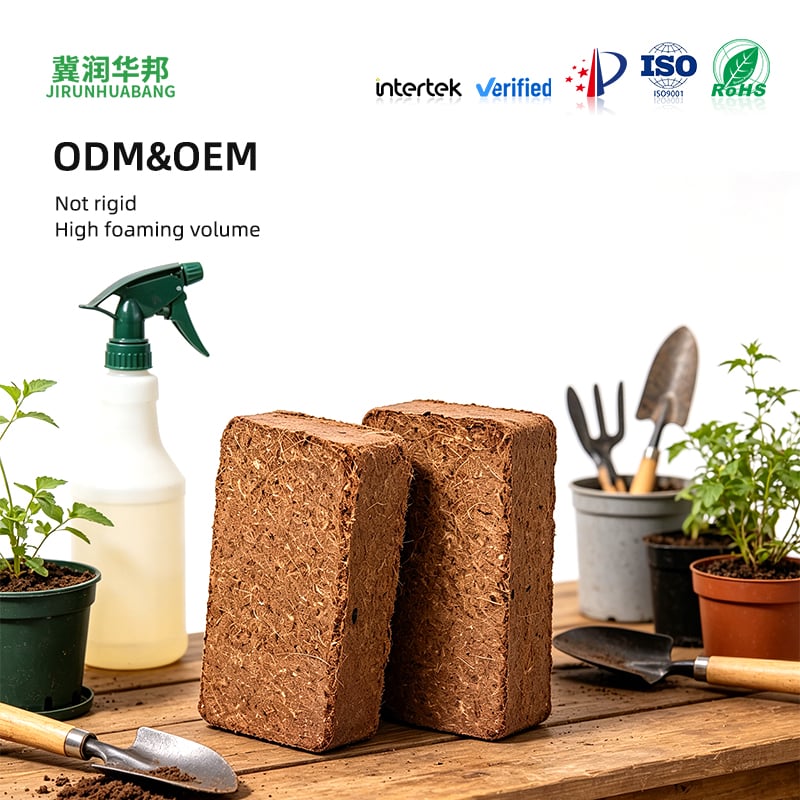
Coco peat brick, also called coconut coir brick, is a renewable, eco-friendly growing medium made from processed coconut husk fiber. After soaking in clean water, one compressed brick can expand into loose fluffy coco peat with large volume. It features great air permeability, strong water retention, suitable weak acid pH value, low soluble salt content and natural decay resistance. Different from ordinary garden soil and non-renewable peat soil, coco peat brick is lightweight, sterile, weed-free and reusable. It contains no weed seeds, insect eggs or harmful bacteria, safe for plants, pets and human contact. With low cost and easy storage, it has become a mainstream multi-purpose substrate for home gardening, commercial farm planting, animal feeding and ecological restoration worldwide. It can be used alone or mixed with perlite, vermiculite and garden soil to improve planting conditions greatly.
Home potted plant cultivation is the most popular daily use of coco peat bricks. It fits nearly all household ornamental plants and foliage plants perfectly. Ordinary garden soil is easy to harden, crack and rot plant roots after frequent watering, while loose expanded coco peat keeps soil porous all the time. It allows air to circulate freely inside the soil, preventing root rot caused by water ponding. It holds water slowly and releases moisture evenly, reducing frequent watering times for busy plant lovers. It is ideal for succulents, roses, orchids, pothos, ferns, flowering shrubs and indoor green plants. It can adjust pot soil acidity to help flowering plants bloom brighter. Besides, the clean texture keeps flower pots clean, without messy soil odor or flying dust indoors, suitable for balcony, office and indoor desktop potted planting all year round.
Commercial greenhouse seedling and vegetable planting relies heavily on high-quality coco peat bricks. Large-scale vegetable farms, flower nurseries and tissue culture bases prefer coco peat as professional seedling substrate. Its soft fiber structure protects young tender seedling roots, promotes rapid root germination and improves seed germination rate. Compared with traditional soil seedling beds, coco peat reduces seedling death rate and transplant damage. It is widely used for fruit seedling, vegetable seedling and seasonal flower breeding. For greenhouse tomato, strawberry, cucumber and leafy vegetable planting, mixed coco peat substrate improves crop absorption of water and nutrients, speeds up growth cycle and increases yield. Since it has stable pH and EC value, farmers can control fertilizer dosage accurately, cut planting cost and reduce crop diseases efficiently.
It serves as perfect bedding material for small pets, poultry and reptile breeding. Sterilized purified coco peat is non-toxic, dust-free and odor-controlling, meeting safe breeding standards. For hamsters, rabbits, guinea pigs and other small mammals, loose coco bedding keeps pet nests dry, absorbs urine and peculiar smell, reduces bacteria breeding and protects pet skin. It is soft and warm, avoiding paw scratch injury compared with hard sand bedding. For tortoises, lizards and other reptiles, it simulates natural wild living environment, helps reptiles molt smoothly and regulates habitat humidity. Meanwhile, it can be used as floor padding for chicken and duck poultry farms, absorbing feces moisture, keeping breeding houses dry and lowering poultry infection risk. It is degradable and easy to clean, bringing convenient feeding management for breeders.
Coco peat bricks are widely applied in ecological greening and landscape engineering. For urban community greening, roof garden laying and slope greening, expanded coco peat improves barren sandy soil structure, increases soil organic matter and maintains soil water. It prevents soil erosion on roadside slopes and park lawns, helping grass and green vegetation take root steadily. It is also the core material for making hanging basket soil, vertical wall greening substrate and bonsai culture soil. For water purification and waterscape landscaping, coco fiber can adsorb suspended impurities in pond water, purify ornamental fish pond water quality and create stable ecological waterscape environment. It will not pollute water body, safe for aquatic plant and fish survival.
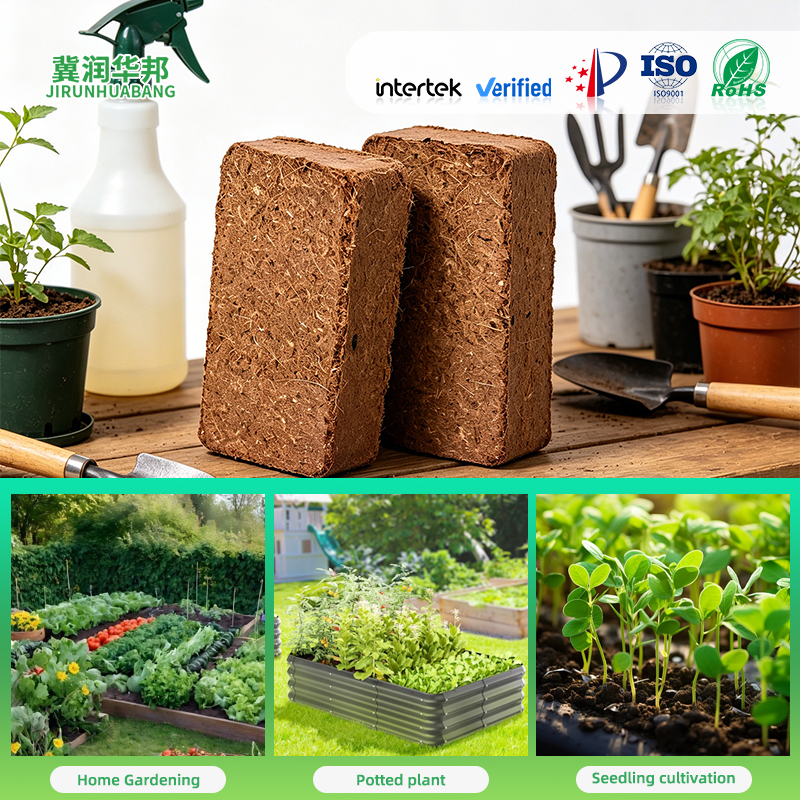
Auxiliary household and industrial usage extends its application value. It can be mixed with organic fertilizer to make nutritious planting soil for family vegetable plots and courtyard fruit trees. It acts as heat preservation filler for plant root protection in cold winter, avoiding frost damage. In handicraft production, dry coco peat is used for handmade landscape decoration and simulation scene making. In conclusion, coco peat brick is a multi-functional green material integrating planting, breeding and ecological restoration. With weed-free, sterile, water-saving and eco-friendly advantages, it replaces traditional peat soil gradually. It brings convenient, safe and low-cost solutions for individual gardeners, commercial planters and ecological engineering customers globally.

 Hot News
 EN
EN